
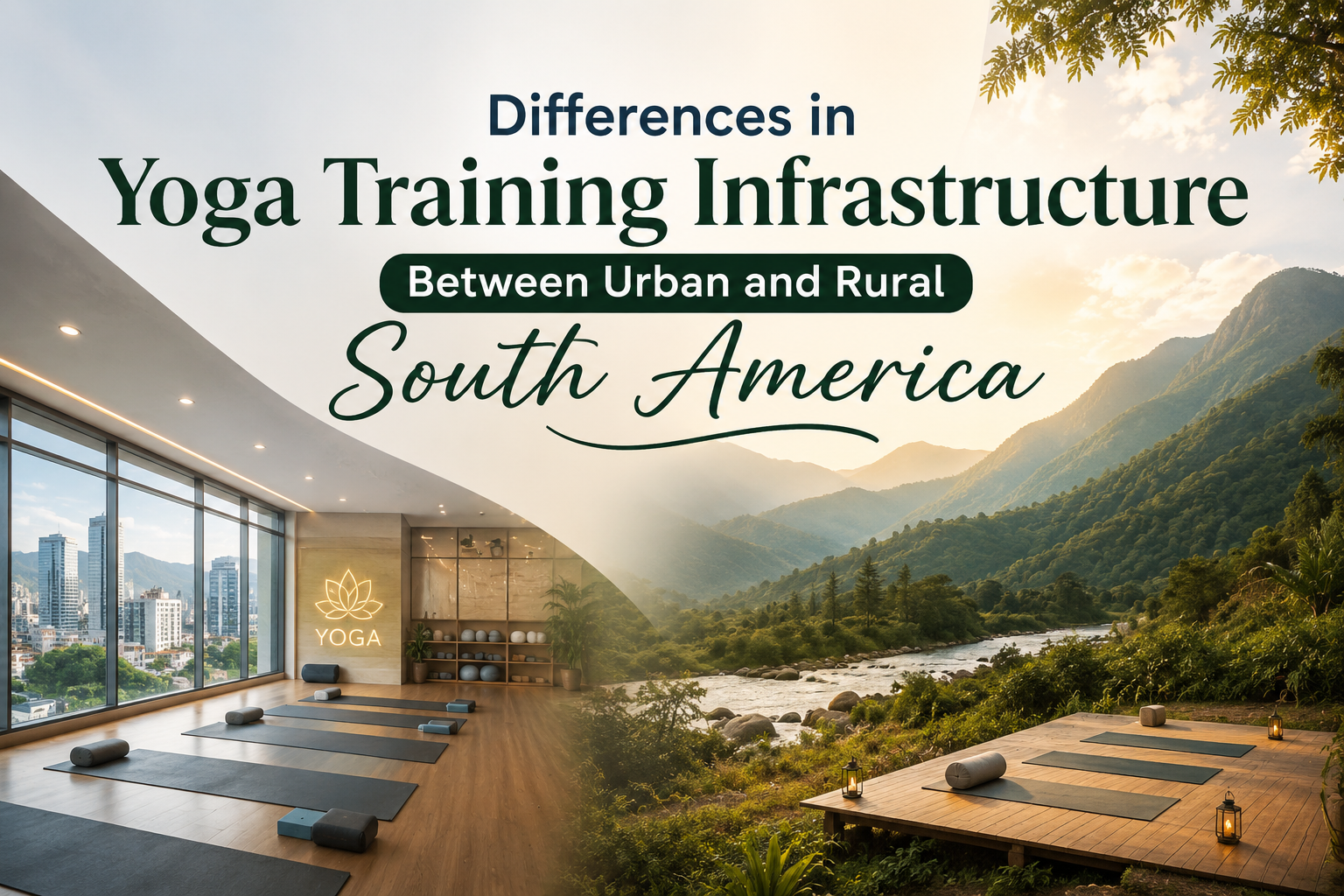
The worldwide call for yoga schooling has extensively improved, and South America has emerged as a promising vacation spot for immersive retreats and base certification packages. However, the differences in yoga training infrastructure between urban and rural South America stay huge due to variations in financial development, accessibility, and institutional investment.
These variations right now have an impact on the extraordinariness of education, student enjoyment, and long-term profession possibilities. In city areas, yoga schooling is regularly supported through the use of current facilities, certified instructors, and installation curricula aligned with worldwide requirements. In assessment, rural areas focus extra on conventional, nature-inclusive gaining of knowledge of reviews, frequently emphasizing holistic development over infrastructure-heavy setups.
Understanding the differences in yoga training infrastructure between urban and rural South America facilitates university students picking out packages aligned with their gaining understanding of style and professional goals.
What Defines Yoga Training Infrastructure in South America?
"Yoga training infrastructure" in South America refers to the bodily, instructional, and organizational structures that support gaining knowledge of and certification in yoga. It consists of yoga studios, retreat facilities, hotel facilities, and access to professional instructors. The tremendous amount of infrastructure right now impacts yoga trainer schooling, South American packages, and their international reputation.
In many areas, infrastructure additionally determines whether or not applications meet the standards of accredited yoga faculties or remain informal learning environments. This difference is particularly important for global college students looking for expert certification and worldwide training possibilities.
Key Components of Infrastructure
-
Training Facilities: Urban areas usually have nicely appointed yoga studios with contemporary-day offerings and dependable setups. Rural areas depend upon open-air, nature-based regions that emphasize simplicity and natural surroundings.
-
Teacher Availability: Cities' attraction to the world's over-licensed instructors with global training experience. Rural regions commonly depend upon nearby traditional instructors with deep-rooted expertise in yoga practices.
-
Accommodation Options: Urban centers provide resorts, serviced apartments, and bendy hotel options for university kids. Rural retreats offer shared eco-inns, ashram-style stays, and clean living environments.
-
Learning Resources: Urban applications normally use digital tools, online structures, and educational manuals. Rural setups recognize more oral education techniques and minimal digital dependency.
-
Accessibility: Urban areas have sturdy transport networks, making adventure easy and convenient for college students. Rural areas often require longer journeys with restricted connectivity to far-flung retreat places.
-
Program Structure: Urban yoga packages observe standardized and globally aligned curriculum frameworks. Rural programs are more flexible, experiential, and targeted on personal transformation and immersion.
How Do Urban and Rural Yoga Training Infrastructure Differ in South America?
The differences in yoga training infrastructure between urban and rural South America are maximum when comparing centers, accessibility, and educational delivery structures. Urban areas are closely prompted by the useful resource of globalization, foremost to established yoga establishments with superior facilities.
Rural areas, but emphasize non-secular immersion and environmental connection, regularly prioritizing immersive yoga experience over technological or architectural sophistication. This creates super-studying environments catering to specific scholar expectations.
Urban vs Rural Comparison
-
Urban Infrastructure: Cities like São Paulo and Buenos Aires provide high-prevention yoga studios, well-being centers, and basic certification programs. These urban setups interest me in professional training, current amenities, and world-famous analysis environments.
-
Rural Infrastructure: Rural areas emphasize retreat-based analysis in natural environments collectively, including mountains, forests, and coastal regions. These spaces prioritize simplicity, immersion, and a deeper connection with nature.
-
Technology Use: Urban yoga schools integrate online learning structures, digital education, and virtual exam materials. Rural facilities specifically rely upon in-character coaching with minimum technological dependence.
-
Student Capacity: Urban applications accommodate massive numbers of college students with scalable infrastructure and multiple batches. Rural applications normally keep smaller, extra intimate groups for customized interest.
-
Curriculum Structure: Cities check standardized modules aligned with global yoga certifications for our bodies and hooked-up checks. Rural packages are extra flexible, experiential, and targeted on holistic studies.
-
Environmental Influence: Rural setups strongly emphasize meditation in herbal surroundings, improving mindfulness and internal reputation. Urban environments, even as primarily based, definitely provide plenty of less direct connections to environmental factors.
What Are Urban Yoga Training Facilities Like in South America?
Urban yoga infrastructure is especially advanced and reflects cutting-edge day-well-being developments. Cities prioritize accessibility, expert certification, and integration with global yoga networks. This makes city facilities best for yoga teacher schooling and South American programs.
Most metropolitan studios are prepared with advanced offerings, consisting of climate-managed studios, anatomical workshops, and digital getting-to-know-you structures. This complements the educational, incredible town yoga studios and improves scholar outcomes.
Features of Urban Yoga Infrastructure
-
Modern Studios: Urban yoga studios are completely organized with mats, props, mirrors, and weather-managed environments. These centers create a professional and cushy area for mounted exercise and schooling.
-
Certified Trainers: Instructors in town centers regularly keep global certifications and global schooling experience. This guarantees great stewardship aligned with worldwide yoga standards.
-
Structured Curriculum: Urban packages examine systematic modules designed in step with global yoga schooling frameworks. This enables maintaining consistency, solving problems, and measurably analyzing consequences.
-
Digital Learning Tools: Many metropolis yoga faculties use online portals, recorded instructions, and virtual exams. These gadgets make getting to know extras bendy and handy for university students with busy schedules.
-
Accessibility: Urban places offer clean and proper entry to public transportation, hotels, and crucial lifestyle facilities. This makes it convenient for each community and global university college student to attend schooling programs.
-
Networking Opportunities: Students in metropolitan yoga environments can connect with well-being professionals and international yoga companies. This publicity leads to professional growth and expert collaboration opportunities.
What Are Rural Yoga Training Facilities Like in South America?
Rural yoga schooling infrastructure is deeply rooted in nature-based and conventional practices. These environments prioritize peace, silence, and religious intensity over technological development. Many rural yoga retreats are placed in forests, mountains, or coastal regions.
Such environments provide a completely particular immersive yoga experience, in which college students disconnect from metropolitan distractions and are interested mostly in personal transformation. However, infrastructure limitations may also have an effect on comfort and accessibility.
Features of Rural Yoga Infrastructure
-
Nature-Based Learning Spaces: Rural yoga infrastructure is constructed of spherical open-air structures surrounded by the use of forests, rivers, and mountains. These natural settings create a peaceful environment that complements the reputation and deepens the exercise.
-
Traditional Teaching Methods: Rural programs emphasize oral scripture, meditation, and non-secular philosophy as middle study techniques. This method preserves ancient yoga traditions and encourages experiential know-how.
-
Eco-Friendly Accommodation: Accommodation in rural yoga retreats is normally easy, sustainable, and environmentally friendly. It is designed to promote minimalism while keeping university students near nature.
-
Limited Technology: Rural yoga facilities use minimal digital gear, encouraging university and college students to disconnect from distractions. This allows for decorating mindfulness, presence, and internal polarity in the course of training.
-
Smaller Batch Sizes: Most rural programs maintain smaller businesses, bearing in mind greater personalized stewardship. This guarantees deeper interaction among teachers and students at a few levels within the mastering system.
-
Spiritual Environment: Rural settings have strong popularity in meditation, pranayama, and internal development practices. The surroundings actually support a spiritual boom and self-reflective photographs.
How Does Accessibility Impact Yoga Training Quality?
Accessibility performs a vital function in identifying how effectively college students can participate in yoga programs. Urban centers benefit from robust infrastructure, while rural regions regularly face logistical challenges. This difference at once influences the accessibility of training applications and impacts international pupil enrollment patterns in South America.
Accessibility Factors
-
Transport Connectivity: Urban regions provide sturdy shipping networks alongside airports, buses, and metro systems. Rural areas often require lengthy-distance adventures with constrained and much, much less common connectivity.
-
Visa and Travel Ease: Cities generally have higher infrastructure and guide structures for worldwide yoga university students. Rural places may additionally, and furthermore, require more planning because of far-off places and limited journey help.
-
Medical Facilities: Urban areas provide quick admission to hospitals, clinics, and emergency healthcare offerings. Rural regions may additionally have restricted medical infrastructure and longer reaction times.
-
Communication Networks: Cities benefit from strong network and cell networks and digital study assistance systems. Rural regions frequently face weaker connectivity, affecting online learning and communication.
-
Geographical Barriers: Urban regions are handy without trouble, with minimum physical obstacles to access training facilities. Rural retreats can also contain mountains, forests, or faraway terrain that make the tour extra difficult.
-
Emergency Services: Urban centers offer faster emergency response structures and well-equipped protection infrastructure. Rural areas can also experience delays because of distance and limited emergency resources.
How Do Costs Differ Between Urban and Rural Yoga Training Programs?
Cost is one exceptional, number one aspect influencing yoga education alternatives in South America. Urban programs will be predisposed to be extra steeply priced because of infrastructure, certifications, and living expenses. Rural programs are commonly cheaper but may also, moreover, additionally embody extra adventure and logistics expenses. These versions affect the affordability of yoga certification programs and well-being tourism in South America.
Cost Breakdown Insights
-
Urban Programs: Urban yoga training applications normally have higher lesson expenses because of superior facilities and certified teachers across the world. These programs are aware of established studies and professional development.
-
Rural Programs: Rural yoga applications typically have decreased lesson prices, making them extra budget-friendly for college students. However, greater excursion and lodging costs may additionally increase the overall rate.
-
Living Expenses: Living prices in cities are substantially higher due to rent, meals, and each day's way of life. In evaluation, rural eco-retreats provide less complex dwellings at fantastically lower everyday fees.
-
Inclusion Services: Urban applications often embody extra workshops, studio access, and virtual access to materials. Rural programs typically consist of accommodations, meals, and a more immersive lifestyle experience.
-
Hidden Costs: Rural yoga schooling can also encompass extra transportation charges to obtain far-off retreat locations. These hidden charges can, from time to time, destabilize the preliminary affordability advantage.
-
Value Perception: Urban education is regularly taken into consideration as profession-oriented and professionally based for worldwide possibilities. Rural schooling is perceived as transformational, specializing in internal increase and religious intensity.
What Are the Challenges and Opportunities in Yoga Training Infrastructure?
The improvement of yoga infrastructure in South America presents both demanding situations and possibilities. Urban areas struggle with commercialization, while rural areas face obstacles in accessibility and assets. However, each environment makes a unique contribution to holistic yoga schooling and the increase of the worldwide yoga way of life.
Key Insights
-
Urban Overcrowding: Urban yoga facilities often revolve in immoderate student calls, which can lessen individualized attention from instructors. This can have an effect on the intensity of private guidance in the course of schooling.
-
Rural Isolation: Rural yoga packages may additionally offer fewer present-day locations and limited infrastructure. However, this isolation regularly enhances attention and detachment from distractions.
-
Growth of Wellness Tourism: The upward push of well-being tourism is generating interest in right yoga reviews at some point in South America. This style is considerably strengthening rural yoga retreat centers.
-
Infrastructure Development: Governments and private groups are investing in well-being hubs and yoga schooling centers. This improvement is enhancing general training extremely well in both town and rural regions.
-
Cultural Integration: Local traditions, indigenous practices, and cultural factors decorate yoga training memories in every setting. This integration offers depth and specialty to the study way.
-
Global Recognition: The expansion of prison yoga schools is bringing great reforms across South America. It additionally enhances the global reputation of yoga certification packages.
Future Trends in Yoga Training Infrastructure in South America
The future of yoga schooling in South America is evolving rapidly, with growing integration of era, sustainability, and worldwide certification requirements. The differences in yoga training infrastructure between urban and rural South America can also, moreover, regularly reduce as hybrid fashions emerge. Digital studying, eco-tourism, and international collaborations are shaping the following era of yoga schooling.
Emerging Trends
-
Hybrid Learning Models: Yoga education is an increasing number of combinations of online metropolitan areas gaining knowledge of with individual rural retreats. This combined approach offers flexibility at the identical time as retaining experiential depth.
-
Eco-Resort Development: There is a growing improvement of sustainable yoga eco-resorts in some parts of South America. These centers' attention is on environmental duty and immersive well-being evaluations.
-
Global Certifications: Yoga schooling programs are shifting towards standardized worldwide certification structures. This allows for ensuring consistency, popularity, and professional credibility worldwide.
-
AI and Digital Tools: Modern yoga schooling is integrating AI-powered structures and virtual learning equipment. These eras beautify accessibility, personalization, and far-flung learning.
-
Sustainable Tourism: Sustainable tourism practices have become essential to yoga retreat development. The popularity is in inexperienced operations and minimal environmental impact.
-
Cross-Cultural Training: Yoga packages now consist of worldwide philosophies and cross-cultural coaching strategies. This enriches analyzing via blending traditional and current procedures.
Get your internationally recognized yoga certification with authentic yoga standards in South America
Conclusion
The differences in yoga training infrastructure between urban and rural South America highlight distinct but deeply complementary techniques to yoga schooling. Urban areas are defined via mounted curricula, superior centers, digital integration, and robust alignment with worldwide certification requirements, making them great for career-centered learning and expert improvement.
In evaluation, rural regions emphasize nature-based immersion, traditional coaching strategies, and religious intensity, presenting a more experiential and transformative learning adventure. Together, these environments create a balanced and severe environment for yoga instructor education in South America, wherein university college students can choose paths aligned with every expert development or internal growth.
Understanding those variations empowers green parents to make informed choices that excellently guide their non-public and expert yoga journey.
Explore Our Recent Blogs
-
Bank, Currency, and Payment Systems Guide for Yoga Students in South America
-
Environmental Conditions That Affect Yoga Practice in Rainforest Regions
-
Local Transportation Costs for Yoga Students in South American Cities
-
How Cultural Festivals in South America Influence Yoga Training Schedules
Frequently Asked Questions
1. What are the main differences in yoga training infrastructure between urban and rural South America?
The primary variations lie in facilities, accessibility, and coaching techniques. Urban areas provide present-day studio-based programs and era-supported mastering environments. In assessment, rural areas are interested in nature-based settings, conventional training strategies, and experiential analysis that emphasizes simplicity and religious depth.
2. Which is better for yoga teacher training, urban or rural South America?
Both town and rural settings are treasured depending on the learner’s dreams. Urban schooling is better suited for university youngsters seeking certification, career advancement, and setup. education. Rural training, but it is right for those searching out inner transformation, mindfulness, and deeper religious exercise.
3. Are rural yoga retreats less professional than urban yoga schools?
Rural yoga retreats aren't a great deal, much less expert; they'd truly be established otherwise. They often focus on conventional gaining of knowledge of strategies, private hobbies, and holistic improvement. Urban yoga schools emphasize formal certification, standardized curriculum, and global professional popularity.
4. How does infrastructure affect yoga certification programs?
Infrastructure performs a key function in shaping the extremely good performance and shipping of yoga certification programs. Urban infrastructure supports advanced facilities, virtual tools, and standardized schooling structures. Rural infrastructure, at the same time as being less complex, complements experiential learning and allows for deeper reference to exercise.
5. Is yoga training in South America affordable for international students?
Yoga training in South America may be reasonably priced, depending on the area and software type. Rural applications are usually in a great extra fee range, imparting lower training charges in comparison to metropolitan centers. However, university students also can want to account for extra adventure and transportation expenses to acquire far-flung retreat locations.
6. What is the future of yoga training infrastructure in South America?
The future of yoga education infrastructure in South America is expected to turn out to be more comprehensive and era-driven. Hybrid study fashions combining online training with rural retreat testimonies have turned out to be increasingly more popular. Additionally, green developments and globally standardized certifications will similarly enhance the first-rate accessibility of yoga training in each city and rural area.