
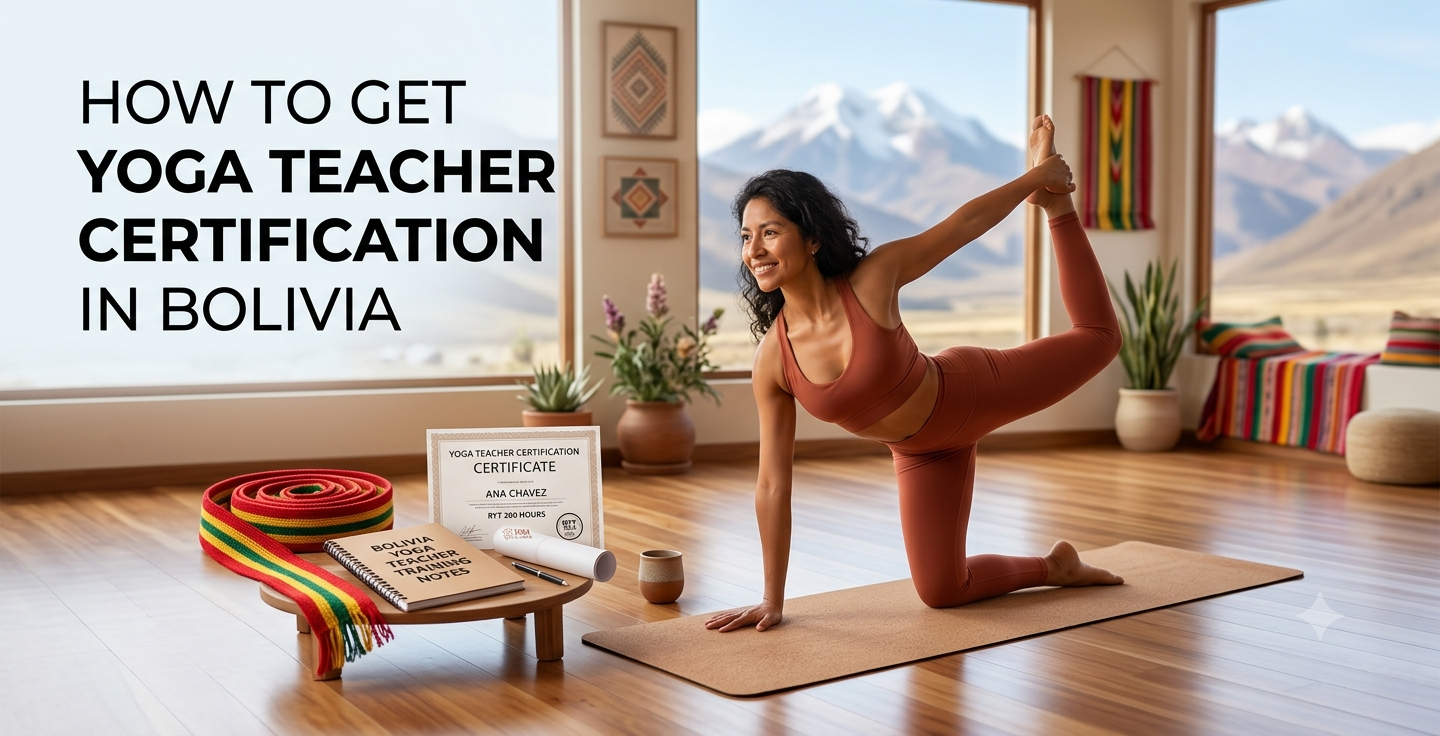
Yoga has become an increasingly popular exercise for physical well-being, mental stability, flexibility, and conscious living. As the hobby of yoga grows, many practitioners in Bolivia are considering professional teacher training to turn their personal practice into a teaching career. A well-designed yoga teacher training programme can help university students increase knowledge of yoga philosophy, asanas, meditation, anatomy, teaching techniques, and professional ethics.
If you’re thinking about how to get yoga trainer certification in Bolivia, the process generally starts by deciding on the proper training programme and knowing its curriculum, length, practical requirements, and certification requirements. Students want to take a look at whether or not the programme provides sufficient coaching practice and whether its certification can aid their career goals. Requirements can vary among schooling carriers, so it’s vital to verify current details straight away with the company before enrolling.
What are the requirements to emerge as an authorized yoga trainer in Bolivia?
Becoming a licensed yoga trainer in Bolivia generally requires finishing an established yoga trainer schooling programme. The specific requirements depend on the college, programme, and certification pathway chosen. Many aspiring instructors start with a foundational programme together with a two hundred-hour yoga teacher training course because it offers a big introduction to yoga philosophy, practical strategies, anatomy, teaching approach, and class planning.
Before enrolling, college students ought to evaluate the faculty’s admission requirements and curriculum carefully. Some programmes can also welcome beginners, whilst others may additionally require previous yoga experience. It is likewise vital to understand attendance rules, tests, coaching demonstrations, practical assignments, and final certification requirements. This information can determine whether or not the programme offers the schooling you want for professional yoga.
Key necessities to check before enrolment
-
Training Hours: Confirm the total number of training hours and what subjects are covered in the programme. A well-designed curriculum aims to mix theory, practice, teaching methods, and practical experience.
-
Yoga Experience: Check whether or not prior yoga experience is required or recommended. Some foundational programmes gather beginners, while advanced programmes might also require prior experience.
-
Attendance: Regular participation is generally critical due to the fact that yoga teacher training includes practical instruction that cannot be completed independently.
-
Assessments: Ask whether or not the course includes examinations, assignments, practical demonstrations, or realistic exams. These activities can help determine whether or not college students have understood the course material.
-
Teaching Practice: Look for programmes that offer supervised coaching possibilities. Practical coaching permits college students to gain self-assurance in sequencing, verbal commands, demonstrations, and classroom control.
-
Certification: Verify what certificate is issued after successful completion. Students ought to recognize the issuing employer, education diploma, curriculum, and any additional registration requirements related to the certificate.
Where are you able to enter yoga teacher schooling in Bolivia?
Yoga teacher education in Bolivia may be completed through specialized yoga schools, health centres, studios, independent teachers, or global education agencies that offer programmes inside the U.S.A. Availability can vary by city and can last up to 12 months, so students want to research current programmes in advance before making a decision. Larger town areas can also provide extra choices, whilst online or hybrid options can provide extra flexibility.
When comparing yoga certification programmes, look beyond the course name. Two programmes may also, moreover, each describe themselves as yoga instructor training; however, they may fluctuate appreciably in curriculum, coaching hours, assessment requirements, and practical relevance. A valid programme must truly provide a purpose for what university college students will research, who teaches the course, how education is delivered, and what documentation college university college students acquire after completion.
What to look at among yoga schools
-
Curriculum: Review whether or not the programme covers asanas, pranayama, meditation, yoga philosophy, anatomy, teaching method, sequencing, and professional ethics.
-
Faculty: Research the academics’ qualifications and education experience. Experienced instructors can offer practical insights that go beyond textbook expertise.
-
Course Format: Compare residential, in-character, online, weekend, widespread, and hybrid formats. Choose a layout that suits your schedule and studying opportunities.
-
Practical Sessions: Check whether a part of the course includes supervised exercise. A trainer training programme wants to offer university and college students opportunities to receive training in a place focused on the idea.
-
Class Size: Smaller groups can also offer more individual feedback during coaching demonstrations and clear instructions. However, the overall quality of training remains more important than the duration of the course.
-
Student Support: Ask whether or not university college students receive mentoring, feedback, take a look at materials, and get guidance after finishing the number one schooling.
Is a 200-hour yoga instructor schooling path enough to train in Bolivia?
A hundred-hour yoga teacher training programme is typically used as a foundational pathway for people who need to grow professional yoga teaching capabilities. It can offer a complete introduction to yoga practices, teaching approach, anatomy, philosophy, meditation, pranayama, and sequence sequencing. However, finishing 200 hours does not routinely guarantee that each studio or organization will understand the qualification in precisely the same manner.
Students must distinguish between completing a yoga teacher education programme and obtaining recognition or registration from a selected business enterprise. A schooling certificate confirms the successful completion of a programme, at the same time as registration can also include additional requirements set by an organisation or professional body. Therefore, every person making plans to teach professionally needs to find out the specific qualification they want in advance of choosing a course.
What a foundational 200-hour programme may additionally cover
-
Yoga Asanas: Students take a look at foundational postures, alignment principles, modifications, and stable strategies to guide practitioners through bodily practices.
-
Pranayama: Training may additionally introduce breathing strategies and explain their connection with attention, rest, and traditional yoga practice.
-
Meditation: Students usually learn one-of-a-kind meditation techniques and analyze the manner in which mindfulness practices may be integrated into yoga instruction.
-
Yoga Philosophy: Foundational programmes often introduce requirements from conventional yoga philosophy, ethical principles, and texts applicable to education and private practice.
-
Anatomy: Basic anatomy enables future teachers to understand movement, frame mechanics, alignment, and common concerns even when going for walks with university students.
-
Teaching Methodology: Students learn how to shape education, provide verbal commands, demonstrate postures, teach practices, and create the perfect learning environment.
How do yoga certification and registration work in Bolivia?
Yoga certification and registration aren’t necessarily the same thing. Certification normally refers to the completion of a yoga instructor training programme and receiving documentation from the training provider. Registration, instead, can also refer to becoming a member of a professional registry or obtaining recognition through a selected yoga business corporation.
For college students thinking about an internationally recognised yoga certification, it is crucial to understand exactly what the company offers. For example, an organisation might also have its very own college or teacher registration framework, while another can also provide education certificates. Students need to evaluate the present-day pointers, eligibility standards, documentation requirements, and renewal rules of the organisation they plan to apply to.
Important registration troubles
-
Certificate Validity: Determine how long the certificates are valid and what qualification degree they represent. Keep the original certificates and digital copies in a safe place.
-
Organisation Requirements: If you wish to sign up with a specific yoga company, evaluate its current eligibility requirements before starting training.
-
Training Documentation: Keep path schedules, curriculum records, attendance records, evaluation results, and any relevant documents in a safe place.
-
Teaching Experience: Some advanced credentials or expert pathways may additionally require training relevant after foundational training. Maintain a file of commands taught and applicable coaching hours.
-
Continuing Education: Professional improvement can assist teachers to expand their qualifications after completing their initial certification. Advanced workshops and specialized training can also guide long-term growth.
-
Local Rules: Certification does not automatically update national, organizational, tax, employment, or facility requirements. Check applicable Bolivian requirements before setting up an expert yoga commercial organization.
How long does it take to become a certified yoga trainer in Bolivia?
The time required to become a licensed yoga trainer is predicated specifically on the programme format. A large yoga instructor training course may be completed within a focused period, whilst weekend or part-time programmes can take appreciably longer. Online and hybrid courses may additionally offer flexible schedules, despite the reality that university and college students must carefully assess how practical teaching requirements are introduced.
The type of schooling hours on my own does not determine the calendar length. Attendance schedules, tests, assignments, educational demonstrations, private practice, and final exams can all have an effect on completion time. Students therefore need to ask the education company for a full course timetable before enrolling.
Factors that could affect the overall time
-
Course Schedule: Intensive programmes can also compress many hours into numerous weeks, at the same time as detailed-time programmes unfold schooling across a longer duration.
-
Attendance Requirements: Missing class sessions ought to make it difficult to finish the programme on time. Check whether missed assignments can be made up.
-
Assessment Deadlines: Assignments, examinations, and training demonstrations may also need to be completed earlier than certification is issued.
-
Teaching Practice: Programmes requiring supervised coaching may additionally require time beyond everyday time for university college students to put together and show their competencies.
-
Personal Practice: Consistent yoga workouts can assist college students to become more comfortable with postures, sequencing, respiration strategies, and training demonstrations.
-
Advanced Training: Students who later pursue 300-hour or specialized yoga training will need to look beyond their foundational programme.
What topics are covered in a yoga trainer schooling programme in Bolivia?
A nicely structured yoga instructor training programme needs to provide more than guidance in physical postures. Future teachers need to understand how to guide students appropriately, speak in fact, design balanced training, and adapt practices to at least one of a kind. The curriculum needs to therefore combine realistic yoga training with theoretical information and training capabilities.
The actual curriculum varies with the resources of the university and the certification level, so college students must request a detailed syllabus before enrolling. An entire programme can also encompass traditional yoga topics, as well as fashionable areas, alongside aspects of anatomy, teaching methods, professional conduct, sequencing, and student safety.
Core regions typically covered in yoga trainer schooling
-
Asana Practice: Students test postures, alignment, changes, transitions, and practical strategies for teaching bodily yoga practices.
-
Pranayama and Breathwork: Training introduces respiratory techniques and explores how they will be included in appropriate yoga durations.
-
Meditation and Mindfulness: Students look at meditation techniques and procedures to guide easy mindfulness practices in a primarily based, completely elegant environment.
-
Yoga Philosophy: Courses can also introduce traditional philosophical requirements, moral practices, and essential concepts that provide context for yoga beyond physical exercise.
-
Anatomy and Physiology: Basic anatomical understanding allows teachers to understand movement and give safer alignment cues.
-
Teaching Methodology: Future instructors study sequencing, cueing, demonstrations, schedule planning, announcements, adjustments, and communication skills.
How are you able to sign in as a yoga instructor after certification in Bolivia?
After completing a yoga teacher schooling programme, the subsequent step depends on the form of professional pathway you want to pursue. Some graduates may additionally start teaching at yoga studios or health centres, while others might also offer private sessions, community education, corporate fitness programs, or online training. Those inquisitive about international credentials can also choose to pursue registration via the proper global employer.
Before applying for registration, evaluate the industry organization’s current requirements carefully. You may also need to provide your educational certificate, work history, identification details, training experience, or special documentation, depending on the registration type. Requirements can change, so candidates should rely upon the corporation’s present-day professional guidance in locating vintage records from websites.
Steps to look at after finishing your education
-
Collect Certificates: Keep your precise yoga trainer training certificate and digital copies. Make certain your call and education facts are correct.
-
Organise Records: Maintain copies of course statistics, training hours, curriculum, tests, and training you enjoy, as relevant.
-
Choose a Pathway: Decide whether or not you need to teach independently, work for a studio, be part of a corporation, or pursue an international registration opportunity.
-
Check Eligibility: Review the cutting-edge registration standards before submitting an application. Confirm that your completed training matches the specified pathway.
-
Submit Documentation: Provide the required records, and preserve copies of your utility and supporting files.
-
Continue Learning: Consider workshops, advanced trainer education, anatomy education, meditation education, or any applicable expert improvement possibilities.
What should you not forget before choosing a yoga instructor certification in Bolivia?
Choosing the proper yoga instructor certification programme is a crucial choice because the quality of your education will have an impact on your self-perception and educational effectiveness. Students must avoid deciding on a course solely because it guarantees rapid certification or uses top-notch advertising and advertising language. Instead, study the curriculum, instructors, training layout, practical necessities, assessment process, and certification records.
It is likewise useful to remember your intended target market. Someone making plans to train in yoga may also have one-of-a-kind academic dreams, from a person interested in children’s yoga, restorative packages, prenatal yoga, meditation, or advanced asana guidance. Choosing a programme that supports your long-term goals may also make your education more useful.
Questions to ask a training business enterprise
-
Who teaches the course? Ask about trainer qualifications, teaching experience, and areas of expertise before enrolling.
-
What does the curriculum encompass? Request an extensive syllabus displaying the subjects, practical durations, coaching method, and evaluation requirements.
-
How are college students assessed? Find out whether or not you have to complete assignments, examinations, practical demonstrations, attendance requirements, or final evaluations.
-
What certificate will I receive? Confirm the name of the issuing institution, programme/degree, study hours, and graduation requirements.
-
Is practical training covered? Practical education will help you increase self-assurance and learn how to handle real classroom situations.
-
What takes place after graduation? Ask whether the university provides mentoring, career guidance, coaching opportunities, advanced guides, or a manual with applicable registration methods.
Get your internationally recognized yoga certification with authentic yoga standards in South America.
Conclusion
Learning the way to get yoga trainer certification in Bolivia includes more than just finishing a brief yoga course. Aspiring instructors want to pick out primarily based schooling that develops their know-how of asanas, pranayama, meditation, yoga philosophy, anatomy, sequencing, teaching approach, and professional duties. A sturdy foundation can assist college students to emerge as more confident and capable teachers.
The subsequent step after certification is predicated upon one’s professional goals. Some graduates may begin coaching at nearby studios or health centres, while others may additionally pursue non-public training, online instruction, advanced yoga education, or international certification. Before enrolling, you should usually confirm the current requirements of the training organisation and any company with which you plan to join. With careful research, regular practice, and excellent teacher training, aspiring teachers can build a solid foundation for training to teach yoga professionally in Bolivia.
Explore Our Recent Blogs
Frequently Asked Questions
1. How can I become a certified yoga teacher in Bolivia?
You can start by selecting a suitable yoga trainer training programme that fits your interests and professional dreams. A foundational 200-hour programme is commonly taken into consideration as a starting point for comprehensive trainer education. After completing the preferred training and checks, you may acquire certification and discover further education or relevant registration alternatives.
2. Is a 200-hour yoga teacher training course enough?
A 200-hour programme can offer foundational training for coaching yoga, depending on the curriculum and certification organization. However, reputation requirements can range among groups, studios, and professional pathways. Always check the requirements of the agency or enterprise in which you need to teach.
3. Can I complete yoga teacher training online?
Some education organizations provide online or hybrid yoga trainer schooling programmes. However, college students want to carefully check how practical teaching, demonstrations, checks, and supervised durations are achieved. If you plan to register with a particular agency, confirm that its modern-day requirements match the unique schooling layout.
4. Do I need previous yoga experience to become a teacher?
Previous yoga experience may be useful, but admission requirements vary among programmes. Some foundational courses are designed for novices, while advanced programmes may also require significant personal experience. Check the college’s eligibility requirements before enrolling.
5. Can I teach yoga internationally after certification in Bolivia?
A worldwide education profession may be possible; however, certification popularity is predicated upon the university, company, agency, and shape of programme finished. International registration may also have separate eligibility requirements. If international schooling is your motive, study the popularity pathway before selecting your initial teacher education route.
6. What should I check before enrolling in a yoga teacher training programme?
Review the curriculum, typical class hours, instructor qualifications, practical training requirements, assessment methods, course structure, and certification details. You also want to determine whether or not the certificates help any registration pathway you need to pursue. Comparing numerous programmes before committing to a course will permit you to choose a route that suits your professional dreams.