
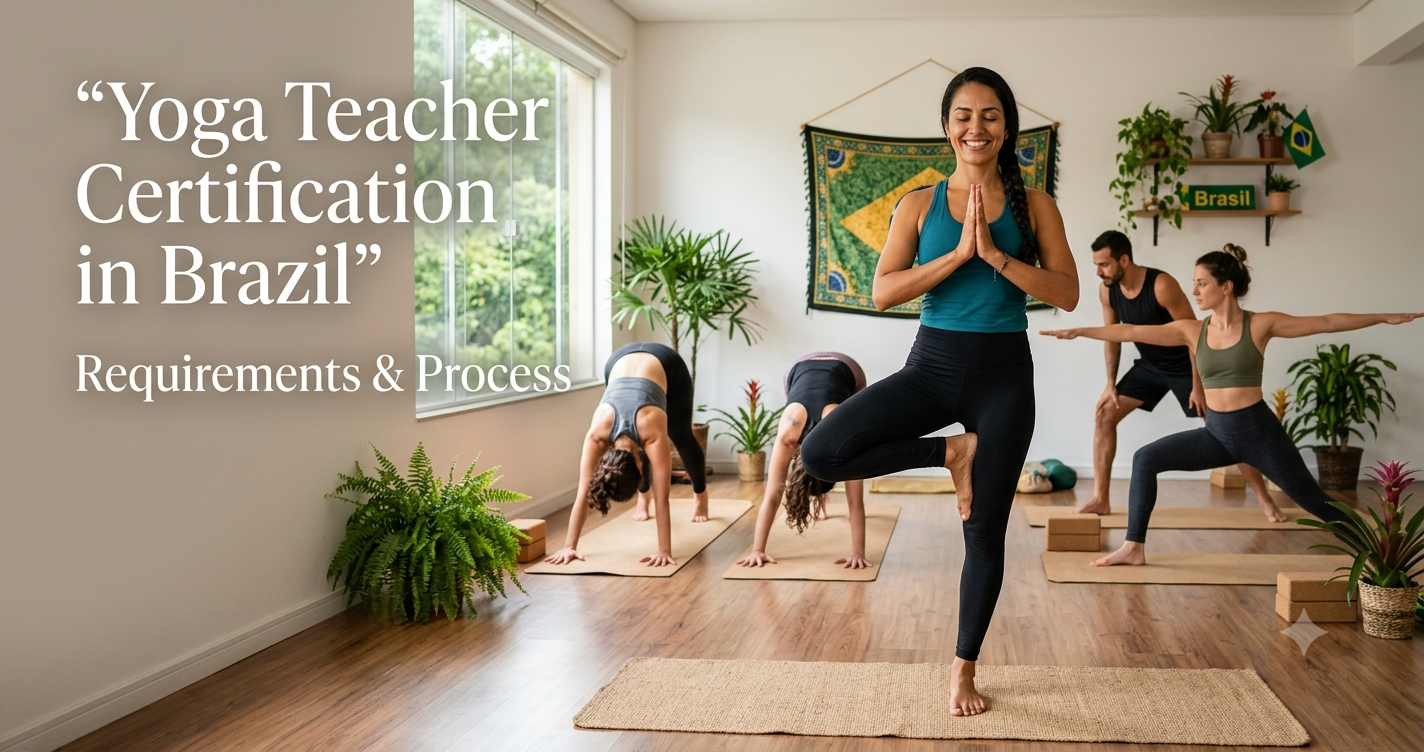
Yoga has become increasingly well-known in Brazil, creating opportunities for people who want to build an expert career as yoga instructors. However, becoming a certified yoga teacher involves more than completing a short course. Aspiring teachers want to understand yoga teacher training, certification requirements, training hours, training capabilities, and the distinction between training certificates and professional reputation.
If you’re reading about how to get yoga trainer certification in Brazil, the first step is to recognize that yoga does not follow one conventional certification model. Certification may be supplied by means of using a yoga school, schooling provider, or international certification employer organization, at the same time as teachers also can want to test relevant Brazilian law and professional requirements. International certification can offer extra expert credibility while working with studios, health centres, retreats, or university college students worldwide.
What Are the Requirements for Yoga Teacher Certification in Brazil?
The requirements for becoming a licensed yoga teacher in Brazil depend on the education provider and certification company you choose. Unlike professions that comply with one standard national licensing system, yoga certification can comprise different colleges, methodologies, course lengths, evaluation systems, and certification requirements. Candidates must therefore cautiously evaluate the requirements of their chosen programme before enrolling.
A primarily based yoga trainer education programme usually covers areas including asana, pranayama, meditation, yoga philosophy, anatomy, coaching methodology, sequencing, ethics, and student safety. Some certification groups moreover set up minimum training requirements for specific certification levels. Understanding those requirements before beginning your training can help you pick out a programme that enables your long-term professional dreams.
Key Requirements to Check Before Enrolling
-
Minimum Training Hours: Check whether the programme offers 200, 300, 500, or any other level of schooling. Clearly described training hours can help show the intensity of your training and its educational possibilities.
-
Comprehensive Curriculum: Look for training that combines practical and theoretical subjects, which includes yoga philosophy, anatomy, pranayama, meditation, training technique, sequencing, and ethics.
-
Qualified Faculty: Investigate the qualifications and experience of the teachers running the course. Experienced instructors can provide sensible guidance.
-
Assessment Requirements: Ask whether the course consists of examinations, assignments, practical demonstrations, teaching tests, or attendance requirements.
-
Certification Organisation: Confirm precisely who issues the final certificate and what the qualification represents. If international recognition is critical to you, verify the organization’s certification requirements before making your choice.
-
Documentation: Some certification pathways may also require a certificate, training information, educational background, a résumé, references, or other supporting documents.
How Long Does Yoga Teacher Training Take in Brazil?
The duration of yoga instructor schooling in Brazil is based on the variety of education hours, the college’s schedule, and whether or not the programme is intensive, part-time, weekend-based, online, hybrid, or residential. A two hundred-hour programme may be finished through an in-depth format or unfold over the course of several months. Longer programmes clearly require extra study, workouts, assignments, and coaching.
When thinking about a way to get yoga teacher certification in Brazil, the large number of education hours need no longer be the terrific element you bear in mind. A great programme needs to provide sufficient time for sensible coaching, theoretical study, feedback, evaluation, and personal development. Comparing the whole curriculum and getting to know and enjoy it is more beneficial than deciding on a programme, actually, because it can be finished quickly.
Common Yoga Certification Levels
-
100-Hour Foundation Training: Foundation-diploma programmes can introduce college students to essential yoga standards and practices. They can be beneficial for personal development or introductory education.
-
200-Hour Yoga Teacher Training: A 200-hour programme is usually used as foundational trainer training. It typically introduces university and college students to yoga philosophy, asana, anatomy, pranayama, meditation, sequencing, and an educational approach.
-
300-hour Yoga Certification: A 300-hour programme commonly gives more advanced or specialised schooling. This is appropriate for instructors who have already been given foundational training and need to extend their knowledge and professional education skills.
-
500-Hour Yoga Teacher Training: A 500-hour programme represents a bigger stage of schooling. It can integrate foundational and advanced topics and may be appropriate for teachers looking for complete professional improvement.
-
Specialised Training: Teachers can also pursue extra education in areas including prenatal yoga, children’s yoga, meditation, restorative yoga, or distinctive specialised subjects.
-
Continuing Education: Professional improvement needs to be maintained after preliminary certification. Workshops, superior guides, professional programmes, and sensible coaching experience can assist licensed instructors in improving their abilities over time.
How Do You Choose a Yoga Teacher Training Course in Brazil?
Choosing the proper yoga trainer education programme in Brazil requires careful research. The least expensive or shortest programme isn’t usually the best option. Candidates want to consider curriculum quality, teacher experience, practical teaching opportunities, assessment methods, certification requirements, course format, and reasonable pricing.
You ought to additionally consider your career plans before choosing a programme. Someone who wants to train at nearby studios can also have unique needs compared with someone planning to teach worldwide retreats, private instruction, wellness programmes, online courses, or yoga teacher training programmes in the future. Choosing training that suits your long-term goals should make your investment more valuable.
Factors to Compare Before Selecting a Course
-
School Credentials: Check the college’s certification or accreditation reputation with the company it claims to represent. Look for clear and verifiable statistics about the certification pathway rather than relying on promotional claims.
-
Course Syllabus: Review the complete syllabus in advance of enrolling. The programme wants to provide a solid foundation in subjects that encompass yoga philosophy, asana, anatomy, pranayama, meditation, and teaching techniques.
-
Teaching Practice: Practical education is vital for building self-confidence. Look for programmes that allow university and college students to practice giving instructions.
-
Learning Format: Consider whether or not online, in-person, hybrid, or residential schooling fits your activities. In-person education can provide direct interaction, while online programmes may offer more scheduling flexibility.
-
Assessment Structure: Understand how your expertise and education capabilities can be assessed. Ask about attendance, assignments, examinations, practical demonstrations, and other requirements before enrolling.
-
Post-Certification Support: Ask whether or not graduates get access to expert guidance, networking possibilities, continuing education, directories, or career resources.
What Is the Process for Getting Yoga Teacher Certification in Brazil?
The process commonly starts with selecting the ideal yoga instructor training programme and ends with completing the desired training and receiving the relevant certification. The proper process depends on the education agency and certification company, so applicants need to carefully check the requirements before starting.
For aspiring teachers, the procedure involves much more than attending classes. Students want to increase their knowledge of yoga practices, philosophy, anatomy, teaching techniques, communication, sequencing, and student safety. Completing practical teaching tests can also help candidates build confidence before starting independent teaching.
Step-by-step manner of the Step Certification Process
-
Step 1: Define Your Career Goal: Decide whether you want to pursue yoga teacher training, non-public durations, retreats, health programmes, online education, or specialised yoga.
-
Step 2: Research Training Providers: Compare Brazilian and worldwide training providers based on curriculum, college, course length, coaching, exercise, assessment, certification, and transport layout.
-
Step 3: Select the Appropriate Training Level: Beginners typically begin with foundational education, at the same time as professional instructors may choose advanced or specialized schooling.
-
Step 4: Complete the Required Training: Attend the preferred education and complete practical and theoretical research. Take each component seriously because, in reality, powerful yoga training requires facts.
-
Step 5: Complete Assessments: Depending on the programme, you may need to complete examinations, assignments, practical demonstrations, interviews, attendance requirements, or sensible assessments.
-
Step 6: Receive Your Certification: Once you meet all programme requirements, you acquire your certificates. If your chosen pathway includes a separate international certification or registration requirement, you may need to complete it.
What Does a 200-Hour Yoga Teacher Training in Brazil Include?
A 200-hour yoga teacher education is commonly designed to offer foundational schooling for folks who want to become yoga instructors. The real curriculum varies among colleges; however, a whole programme needs to combine yoga practice, ideas, teaching approach, and practical enjoyment.
Students want to go beyond the number of hours, with equal time spent on comparing guides. The quality of schooling, curriculum depth, practical training opportunities, feedback, assessments, and university experience may also have a large effect on the overall learning experience. A well-rounded programme wants to prepare students to teach responsibly, not simply to offer a certificate.
Subjects You May Study
-
Asana and Alignment: Students take a look at yoga postures, variations, alignment ideas, modifications, and suitable verbal instructions. This expertise enables teachers to adapt practices to at least one of our bodies and skills.
-
Pranayama: Students examine conventional respiration practices and the way to introduce them successfully in the direction of commands. Responsible training requires an understanding of technique and suitable application.
-
Meditation: Meditation training can encompass interest practices, traditional strategies, mindfulness tactics, and techniques for guiding university students through meditation training.
-
Yoga Philosophy: Philosophy enables students to understand the broader thoughts and traditions behind yoga. Courses may also explore classical standards, ethical principles, traditional texts, and the philosophical foundations of yoga.
-
Anatomy and Physiology: Basic anatomy helps teachers understand movement, bodily limitations, alignment worries, and suitable modifications.
-
Teaching Methodology: Students learn how to form classes, sequence postures, deliver clear instructions, demonstrate techniques, observe college students, and respond to particular learning goals.
Is Yoga Certification Legally Required to Teach Yoga in Brazil?
This question requires a distinction between yoga certification and legal or expert requirements. Yoga certification is typically an educational credential issued by an educational corporation or certification enterprise. It no longer needs to be automatically described as a central authority-issued licence or as an opportunity for any criminal requirements that may have a look at expert sports in Brazil.
Anyone making plans to teach yoga commercially wants to have a look at the requirements that comply with their particular state of affairs. These can depend on where they train, how their company is set up, the type of offerings they provide, and the employer or facility where they work. Understanding those versions can help instructors avoid making defective professional claims.
Important Legal and Professional Considerations
-
Certification Is Not the Same as a Government Licence: A yoga certificate demonstrates the final step of a particular education programme or certification pathway.
-
Check Local Requirements: Investigate the local, tax, business, and professional requirements relevant for your region and type of yoga interest. Requirements can vary depending on how and where you offer classes.
-
Respect Your Scope of Practice: Yoga instructors need to work within the barriers of their training and expertise. They should not present themselves as scientific or healthcare experts until they hold the precise qualifications.
-
Consider Insurance: Professional liability coverage can provide extra safety depending on your coaching surroundings. Check whether your certification and education meet the insurer’s requirements.
-
Maintain Professional Records: Keep copies of certificates, education transcripts, continuing education records, tests, and other professional files.
-
Follow Ethical Standards: Professional behaviour, student safety, respectful communication, suitable barriers, privacy, and accessibility are important factors of responsible yoga coaching.
How Much Does Yoga Teacher Certification Cost in Brazil?
The cost of yoga instructor certification in Brazil varies, depending on the schooling company, programme diploma, course structure, location, university, lodging, training hours, and certification fees. Residential programmes can also have higher regular expenses because they will include accommodation, meals, facilities, and in-depth training. Online and weekend programmes may also have particular pricing systems.
Candidates have to calculate the complete cost instead of looking only at the advertised tuition price. Registration, exams, certification, getting to know substances, the journey, lodging, food, insurance, and continuing education can all have an effect on the final cost. Comparing trendy prices makes it a great deal less complicated to pick out a programme that fits your finances.
Costs You Should Check
-
Tuition Fee: Confirm the whole programme or schooling fee before enrolling. Check whether the rate covers the entire programme or whether it is only for part of the programme.
-
Certification Charges: Ask whether or not examination, assessment, registration, or certificate-issuance costs are separate. Knowing the charges earlier can help you avoid surprising fees.
-
Accommodation: Residential programmes may include motels or offer them as an alternative. Check whether or not food, transportation, and extraordinary residential expenses are included.
-
Study Materials: Find out whether or not textbooks, manuals, virtual resources, and other learning materials are covered in the programme rate. Additional resources may also increase your typical expenditure.
-
Travel Expenses: If you travel to each exceptional Brazilian city for education, include transportation and local activities in your fee variety.
-
Continuing Education: Professional development may additionally keep up after initial certification. Budget for destiny workshops, expert courses, advanced programmes, and one-of-a-kind instructional opportunities.
Can International Yoga Certification Help Teachers in Brazil?
International yoga certification can assist instructors to monitor their education and professional development while also taking workshops with university students from different international locations. It can be particularly useful for teachers who want to train global retreats, health centres, hotels, online programmes, or university or college students outside Brazil.
However, global certifications should no longer be robotically considered a general expert licence. Its value depends on the company issuing the credential, the standards observed, and the requirements of the business enterprise or area wherein the teacher intends to work. Candidates need to consequently recognize exactly what their certification represents.
Benefits of an International Credential
-
Professional Credibility: A recognized certification can provide evidence that you have completed relevant yoga schooling. This can assist potential university and college students and employers in understanding your professional qualifications.
-
International Visibility: A global credential can also help teachers present their qualifications to university and college students and organizations outside their network location.
-
Career Flexibility: A strong educational foundation can be a useful resource in studios, retreats, nonprofit organizations, hospitality, personal coaching, and online schooling.
-
Professional Networking: International certification businesses can provide opportunities to connect with instructors, colleges, educators, and practitioners.
-
Continuing Education: Teachers can keep developing their expertise after foundational certification. Advanced training can assist them in improving teaching abilities or specialising in specific regions.
-
Stronger Professional Profile: Teachers can include relevant qualifications, training hours, experience, and further education on their CV, website, and professional profiles.
How Can You Start a Yoga Teaching Career After Certification?
Completing a certified yoga teacher Brazil programme is a vital step; however, certification is the start of a professional education journey. New instructors need to build verbal exchange, class management, sequencing, cueing, and student-management skills. Practical experience is crucial for turning theoretical knowledge into effective education.
Start grade by grade by gaining coaching, enjoying, and seeking out positive feedback from experienced instructors. Observe one-of-a-kind training patterns, develop elegant education plans, create clear verbal instructions, and maintain studying anatomy, philosophy, accessibility, and secure coaching practices. A dedication to ongoing learning will let you construct a sustainable career.
Practical Ways to Build Your Career
-
Begin With Teaching Practice: Teach suitable education to increase self-confidence and practical experience. Focus on clear communication, considerate sequencing, pupil assertion, and growing a supportive environment.
-
Create a Professional Profile: Develop a professional profile that clearly describes your certification, training hours, teaching style, interests, and areas of expertise. Make certain every expert declaration is correct.
-
Network With Local Studios: Connect with yoga studios, well-being centres, retreat organisers, and other relevant corporations. Networking allows you to find out about coaching opportunities and expert collaborations.
-
Offer Appropriate Classes: Start with courses that fit your actual schooling and what you enjoy. Avoid presenting yourself as an expert in areas where you haven’t completed relevant education.
-
Continue Your Education: Attend workshops, professional publications, and advanced education programmes to reinforce your knowledge. Continuing schooling, moreover, will let you develop a solid base of knowledge.
-
Build Student Trust: Professionalism, consistency, punctuality, respectful boundaries, communication, and secure education practices are critical.
Get your internationally recognized yoga certification with authentic yoga standards in South America.
Conclusion
Getting yoga teacher certification in Brazil calls for cautious planning, the right training programme, and clear information on certification requirements. From deciding on the best education stage to completing practical and theoretical research, every step contributes to building the knowledge and self-belief needed to teach yoga responsibly. Candidates must have a look at course curriculum, training hours, school reviews, assessment techniques, certification requirements, and general expenses before enrolling.
Whether you select a hundred-hour foundation programme or pursue advanced 300- or 500-hour education, first-rate education must remain the concern. An appropriate certification can enhance your professional profile and open possibilities in yoga studios, well-being centres, retreats, private training, and global settings. With non-stop analysis, realistic enjoyment, and the willpower to do moral coaching, you may build a worthwhile and sustainable yoga training career in Brazil.
Explore Our Recent Blogs
-
International Yoga Certification for Experienced Teachers in Cusco
-
How to Get Yoga Teacher Certification in Argentina: A Complete Guide
Frequently Asked Questions
1. How do I get yoga teacher certification in Brazil?
To understand how to get yoga trainer certification in Brazil, start by choosing an established yoga trainer education programme that fits your professional goals. Complete the desired education hours, theoretical research, practical education, and exams before receiving the relevant certificates. If you want an international credential, check the certification organisation’s requirements one at a time.
2. Is a 200-hour yoga teacher training enough to become a yoga teacher in Brazil?
A 200-hour programme can offer foundational schooling for folks who need to begin training yoga. However, the fee for the qualification is predicated upon the curriculum, school, evaluation method, and certification requirements, rather than the number of hours alone. You ought to furthermore check the requirements of the studios, employers, or establishments in which you advise to teach.
3. Can I get international yoga certification in Brazil?
Yes, international certification pathways can be available to yoga instructors and university or college students in Brazil. The particular eligibility requirements depend upon the certification company and the schooling programme you enter. Candidates need to confirm the current requirements, application method, course requirements, and reputation of the credential before enrolling.
4. Do I need previous yoga teaching experience before starting teacher training?
Many foundational trainer-training programmes are designed for individuals who are beginning their expert schooling journey, so large training experience might not generally be required. However, some schools can set up their own admission standards. It is important to test whether or not the programme expects previous non-public yoga exercise, coaching experience, or different qualifications.
5. What should I look for in a yoga certification course in Brazil?
Look for a programme with an entire curriculum, licensed teachers, sensible coaching possibilities, smooth evaluation requirements, apparent costs, and a verifiable certification pathway. Important subjects can also include anatomy, yoga philosophy, asana, pranayama, meditation, coaching approach, sequencing, ethics, and pupil protection. You need to furthermore affirm who provides the final certificate and what the qualification represents.
6. Can certified yoga teachers work internationally after completing training in Brazil?
International certification can make it less complicated to illustrate your educational history to worldwide college students, studios, retreat organisers, and employers. However, certification no longer automatically guarantees employment or permission to teach in every Teachers planning to work in remote places have to check the local S.A.'s legal guidelines, visa requirements, insurance regulations, and commercial employer necessities.