
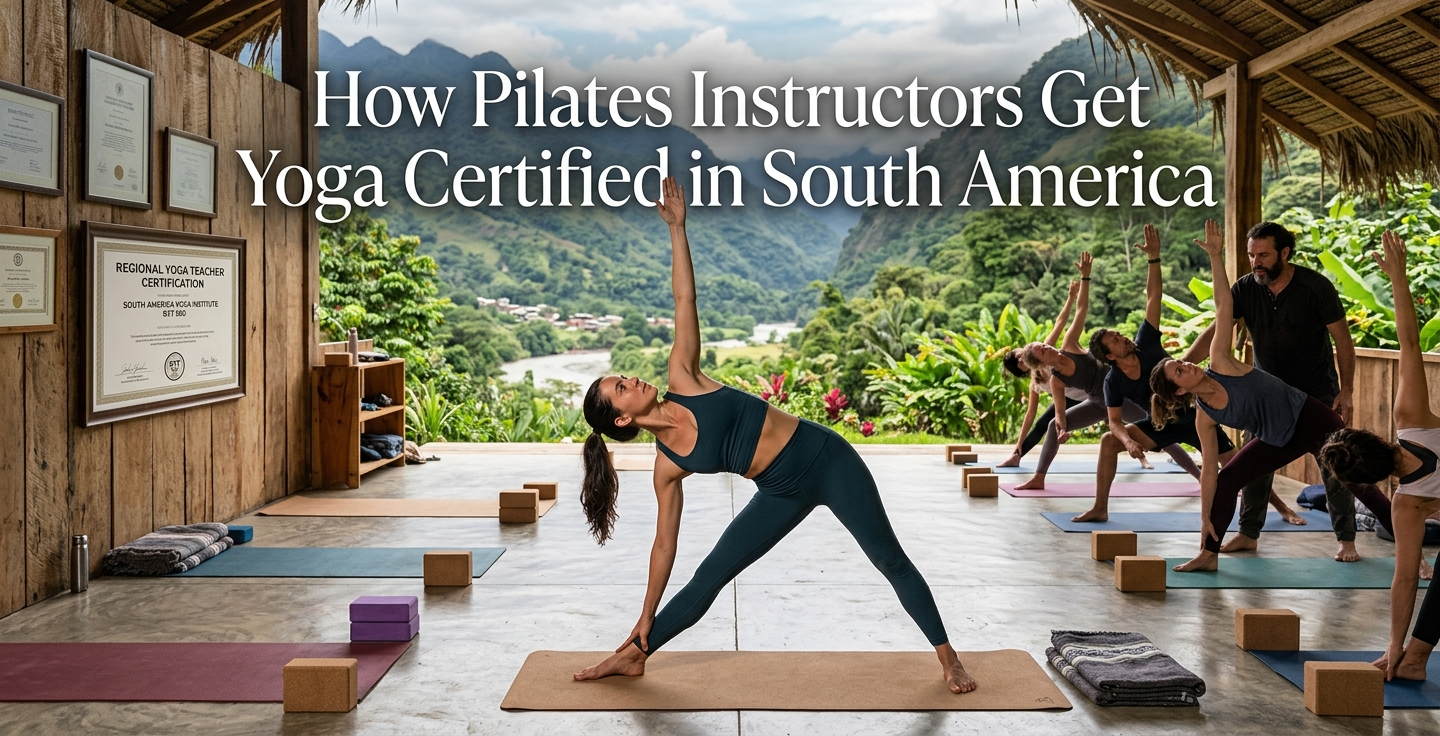
Pilates and yoga are famous fitness practices that target flexibility, energy, posture, frame recognition, and overall well-being. Although they are considered to have different origins and training methods, both disciplines inspire controlled movements, proper breathing, and mindful physical activity. Pilates instructors who need to increase their expertise can consider learning yoga as an additional competency. Yoga training can help them understand traditional movement practices, meditation, and breathing strategies at the same time as developing a broader approach to physical health.
Understanding How Pilates Instructors Get Yoga Certified in South America includes exploring eligibility, education alternatives, route period, and expert opportunities. Previous Pilates education experience can provide a beneficial basis in anatomy, posture, and movement management; however, it no longer routinely qualifies someone to teach yoga. An established yoga trainer training programme permits instructors to understand yoga philosophy, asanas, pranayama, meditation, and coaching approach.
Why Should Pilates Instructors Consider Yoga Certification in South America?
Pilates teachers already have expertise in frame alignment, center stability, flexibility, and controlled movements. These talents can assist their practice of yoga because, in truth, each discipline inspires frame focus and body awareness. However, yoga consists of more elements, including conventional philosophy, meditation, pranayama, and effective approaches to physical postures. Learning these subjects through an expert yoga teacher training can help Pilates teachers extend their gift knowledge and discover other educational opportunities.
South America offers a diverse range of options for people interested in yoga training. The location offers rich cultural experiences, well-being organizations, and opportunities to learn from yoga instructors with diverse backgrounds. Pilates instructors can training programmes in Brazil, Argentina, Chile, Peru, and other countries regularly, with their instructional opportunities. Combining expert study with international publicity can also help them recognize how yoga is practised in specific communities.
Professional Benefits of Combining Pilates and Yoga
-
Expanded Teaching Knowledge: Yoga certification introduces Pilates instructors to extra movement strategies, respiratory practices, and meditation.
-
Improved Body Awareness: Yoga training explores posture, balance, flexibility, and conscious motion. These ideas can supplement the existing knowledge Pilates teachers have gained through expert training.
-
Additional Career Opportunities: Learning yoga can assist teachers in discovering opportunities at yoga studios, well-being centres, fitness centres, and retreat places.
-
Personal Development: Yoga training encourages self-recognition, focus, and discipline. Studying meditation and yoga philosophy can offer instructors a deeper understanding of the practice.
-
International Exposure: Training in South America can introduce university students to particular training environments and well-being groups.
-
Professional Versatility: Having appropriate qualifications in each discipline can assist instructors in working with a wide variety of health customers.
Take the Next Step in Your Yoga Journey with YAI South America
Whether you are a yoga teacher looking for professional certification or a yoga school seeking certification, YAI provides opportunities to support your professional journey and recognition. Choose the relevant application below to get started.
School: https://form.jotform.com/250402319636452
Teacher: https://form.jotform.com/250700797178464
What Are the Eligibility Requirements for Pilates Instructors to Join Yoga Teacher Training?
Most foundational yoga training programmes welcome individuals who are interested in growing their yoga training competencies. Pilates teachers may additionally already recognize human anatomy, posture, movement management, and physical conditioning. This ancient knowledge may be beneficial while studying yoga asanas and alignment standards. However, each school has its own admission requirements, so applicants have to check the eligibility standards before submitting an application.
In South America, prospective students can discover specific yoga schools and compare their admission requirements. Some programmes accept novices at the same time, while others require yoga experience before enrolment. A 200-hour yoga teacher training course is a common starting point for people interested in professional yoga education. Schools may additionally request non-public records, prior academic records, or a program form. Previous Pilates coaching experience can help however, students need to complete the desired yoga curriculum.
Common Admission Requirements
-
Interest in Yoga: Applicants need to have a true interest in reading yoga as a physical and holistic exercise. Regular personal exercise can help students become familiar with basic yoga poses.
-
Previous Fitness Experience: Pilates teachers can point out their professional experience in movement education, flexibility, and posture.
-
Physical Readiness: Students have to be prepared to participate in normal yoga sessions and sensible sports activities. Advanced flexibility or the ability to carry out hard poses isn’t typically required for every foundational route.
-
Minimum Age: Many professional training programmes require candidates to be at least 18 years of age. Students want to verify the proper age requirements with their selected school.
-
Required Documentation: Some schools can also request identification, educational info, previous certificates, or a program. International students must additionally check visa and enrolment documentation requirements.
-
Commitment to Learning: Yoga training consists of sensible periods, theoretical education, and impartial practice. Applicants need to be organized to participate frequently and meet the course requirements.
How Can Pilates Instructors Choose the Right Yoga Teacher Training Programme in South America?
Selecting the best yoga trainer schooling programme is an essential step in understanding how Pilates Instructors Get Yoga Certified in South America. Different schools provide special training techniques, course structures, and certification alternatives. Pilates experts should look for programmes that cover yoga philosophy, asanas, pranayama, meditation, anatomy, and coaching techniques. An entire curriculum needs to provide a reason for the standards of yoga in preference to focusing solely on physical postures.
South America offers outstanding study environments, including urban yoga studios, residential training centres, and well-being retreats. Brazil and Argentina have established fitness groups, as well as Peru and Ecuador, attracting people interested in well-being and retreat reviews. However, the vacation spot no longer needs to be the extraordinary element when deciding on a school. Students want to carefully look at the academic qualifications, course content, sensible education hours, and certification arrangements in advance before making their choice.
Important Factors to Compare Before Enrolment
-
Course Curriculum: Review the topics included in the programme, which includes yoga postures, respiratory exercises, anatomy, philosophy, and meditation.
-
Teacher Qualifications: Research the professional background and academic history of the instructor. Experienced yoga educators can offer valuable guidance at some level in the training approach.
-
Training Format: Compare residential, full-time, part-time, and combined learning programmes. Choose a layout that fits your work obligations and getting-to-know opportunities.
-
Practical Teaching Experience: Select a direction that consists of supervised teaching practice and feedback. These courses will let you develop self-assurance in guiding yoga students.
-
Certification Recognition: Check which organisation or commercial enterprise issues the certificate. If you need to train across the world, check out the applicable registration and popularity requirements independently.
-
Student Feedback: Read actual reviews and test the school’s path pointers. Clear information about prices, attendance, assessments, and refunds will let you make a knowledgeable choice.
Which Yoga Certification Courses Are Suitable for Pilates Instructors in South America?
Pilates instructors interested in becoming yoga instructors must understand the unique degrees and types of yoga education. The 200-hour Yoga Teacher Training programme is a common entry-level diploma programme. It introduces students to crucial yoga standards, bodily postures, breathing strategies, meditation, anatomy, and training techniques. For Pilates instructors, this qualification can provide a solid foundation in yoga and develop the abilities required to teach beginner-level classes.
After completing foundational training, teachers may discover advanced programmes alongside 300-hour and 500-hour yoga instructor training. These guides usually provide more extensive training in yoga philosophy, advanced postures, specialised training techniques, and practical training. The proper programme is based upon the trainer’s previous yoga level and professional targets.
Different Yoga Certification Options
-
200-hour Yoga Teacher Training: This is not an unusual starting point for aspiring yoga teachers. It covers foundational yoga practices, anatomy, philosophy, meditation, and training technique.
-
300-Hour Advanced Yoga Training: This programme is normally meant for humans who’ve already finished foundational training.
-
500-Hour Yoga Teacher Training: This educational pathway commonly combines foundational and advanced training components.
-
Hatha Yoga Teacher Training: Hatha yoga focuses on physical postures, breathing techniques, and stability. Pilates instructors may additionally discover its emphasis on controlled movements and posture.
-
Vinyasa Yoga Teacher Training: Vinyasa yoga connects physical actions with breathing styles. It introduces instructors to flowing sequences and coordinated movement techniques.
-
Restorative Yoga Training: Restorative yoga focuses on relaxation, supported postures, and conscious breathing. It can introduce Pilates experts to mild practices that supplement energetic health intervals.
How Does the Yoga Teacher Certification Process Work for Pilates Professionals?
The yoga trainer certification procedure entails numerous steps, beginning with selecting an appropriate training programme and finishing with its academic requirements. Pilates teachers want to first pick out their professional dreams and determine why they need to add yoga to their existing qualifications. Some may additionally need to study yoga professionally, while others may also desire to expand their fitness knowledge or develop a more complete understanding of movement and mindfulness.
During the training programme, students take part in theoretical lessons and practical yoga sessions. They learn how to perform asanas, understand breathing techniques, and learn body alignment and flow-based yoga sequences. Pilates teachers can use their present movement know-how as a basis, but they want to additionally understand yoga-unique training ideas. Most complete programmes encompass realistic schooling checks, assignments, or examinations to evaluate students’ records.
Step through the usage of the Step Yoga Certification Journey
-
Identify Your Professional Goals: Decide whether you want to train in yoga professionally, provide greater fitness services, or decorate your personal exercising.
-
Research Yoga Training Schools: Explore yoga training centres throughout South America. Compare their course structures, teacher reviews, training hours, and certification options before you make a decision.
-
Check Admission Requirements: Review the eligibility requirements and documents required for enrolment. Ask the training provider whether previous Pilates education relevant to your application can assist your application.
-
Select a Suitable Course: Choose a programme that suits your current knowledge and career goals. A foundational 200-hour yoga instructor training direction is typically an appropriate starting point for aspiring yoga instructors.
-
Complete Theoretical and Practical Training: Participate in yoga workouts, anatomy training, philosophy discussions, and meditation guidance. Learn how to teach postures and manual adjustments to students through appropriate sequences.
-
Complete the Required Assessments: Participate in training demonstrations, written examinations, or one-of-a-kind assessments required through the school.
How Long Does It Take to Get Yoga Teacher Certification in South America?
The period of yoga instructor certification relies upon the programme format, education hours, and the learning layout. A 200-hour yoga instructor training path may be completed via an in-depth residential programme or a part-time schedule over several months. Intensive programmes usually comprise daily yoga practice, theoretical training, and training in physical activities. Part-time programmes provide more flexibility for working professionals who need to balance their current day-to-day Pilates work with further training.
Advanced training programmes normally require more time and determination. A 300-hour route may additionally take numerous weeks in an intensive format or a prolonged duration through modular and weekend instruction. The common duration can also depend on attendance requirements, practical checks, and practical assignments. Pilates teachers should avoid choosing a route that guarantees quick certification.
Factors That Influence Training Duration
-
Intensive Residential Training: These programmes contain daily lessons over a concentrated period. They can be suitable for Pilates instructors who can briefly take time away from their everyday professional responsibilities.
-
Part-Time Learning: Part-time programmes spread classes over a period of several weeks or months. This layout permits working professionals to preserve their current coaching schedules while pursuing yoga training.
-
Online and Blended Courses: Some schools combine online theoretical lessons with in-person practical training. Students need to verify how practical training, attendance, and training exams are conducted.
-
Advanced Certification: Completing a 300-hour or other advanced programme requires strong training determination. The length is determined by the university’s time desk and admission requirements.
-
Personal Yoga Practice: Developing self-assurance in yoga requires steady practice outside formal, observed classroom lessons. Students should allow sufficient time to apprehend great postures and beautify their techniques.
-
Assessment Requirements: Practical demonstrations, written examinations, and attendance requirements will have an impact on the overall timeline.
What Are the Career Opportunities for Pilates Instructors After Getting Yoga Certified?
Obtaining yoga instructor certification can assist Pilates teachers in discovering greater professional possibilities within the health and well-being commercial enterprise. Instead of limiting their offerings to at least one movement issue, they’re able to increase their expertise in complementary practices. Depending on their qualifications and interests, they’ll go through in-depth trainin gin yoga instruction, working out personal sessions, or working with wellness corporations. An extra qualification can also help them build a more flexible professional profile, even while working in fitness studios and wellness centres.
South America offers high-quality environments in which qualified yoga instructors can find career opportunities. Cities such as São Paulo, Buenos Aires, Santiago, Bogotá and Lima have fitness and health groups in which Pilates and yoga are practised. Retreat locations and hospitality agencies might also offer opportunities for effectively qualified instructors. However, employment is primarily based on network name, language skills, professional relevance, and job artwork eligibility.
Potential Career Paths After Yoga Certification
-
Yoga Studio Instructor: Qualified Pilates specialists can find training opportunities at yoga studios and fitness centres. They may also provide beginner-friendly instruction or teach unique yoga styles supported by their education.
-
Combined Pilates and Yoga Instructor: Professionals with suitable qualifications in both disciplines can also provide separate Pilates and yoga sessions.
-
Private Yoga Instructor: Private training allows teachers to work with people who want custom-designed guidance. Sessions can be tailored to match college students’ enjoyment, comfort, and study goals.
-
Wellness Retreat Instructor: Retreat centres may also interact with qualified specialists to conduct yoga training and fitness activities. Teaching enjoyment and verbal exchange skills may be beneficial while working with people worldwide.
-
Online Yoga Educator: Instructors can explore virtual yoga instruction, recorded sessions, and online training. They must make sure that their teaching techniques provide suitable guidance for students working remotely.
-
Independent Wellness Professional: Experienced teachers want to remember to register their enterprise, secure professional coverage, and follow network guidelines before beginning independent operations.
How Can Pilates Instructors Build a Successful Yoga Teaching Career in South America?
Completing yoga instructor education is an important career milestone, but building a fulfilling profession requires persistent mastery and sensible enjoyment. Pilates teachers often need to look at their yoga training through supervised practice, amateur-best training periods, and incredible feedback. They want to understand how to give commands clearly, show appropriate changes, and recognize the distinct needs of students.
For experts making plans to teach in South America, understanding the local business environment is also crucial. Spanish and Portuguese are extensively used throughout the region, even though English can be suitable in a few international business environments. Learning the local language can enhance communication with students and help teachers build professional relationships. They also need to study local employment requirements, licensing requirements, and coverage options.
Practical Ways to Develop a Professional Yoga Career
-
Gain Practical Teaching Experience: Begin with supervised training opportunities and often gain self-confidence in carrying out complete yoga classes.
-
Develop a Teaching Specialisation: Explore areas which include Hatha yoga, Vinyasa yoga, restorative yoga, or beginner-level training.
-
Improve Communication Skills: Learning Spanish or Portuguese can be particularly valuable whilst strolling with network students.
-
Build a Professional Portfolio: Prepare an expert profile highlighting your Pilates experience, yoga qualifications, and relevant training abilities.
-
Connect With Wellness Communities: Building relationships with one-of-a-kind teachers can help you explore training opportunities and career prospects.
-
Continue Professional Education: Continuously gaining knowledge can enhance teaching quality and support long-term professional development.
Get your internationally recognized yoga certification with authentic yoga standards in South America.
Conclusion
Understanding how Pilates Instructors Get Yoga Certified in South America can help fitness specialists plan their next step towards broader professional development. Although Pilates offers a precious foundation in movement training, posture, flexibility, and physical awareness, yoga calls for a primarily self-study approach. Completing the right yoga teacher education programme permits teachers to take a look at yoga philosophy, asanas, pranayama, meditation, anatomy, and teaching techniques.
South America offers one-of-a-kind academic and pleasant environments for people interested in yoga training. By studying at an appropriate school, evaluating certification programmes, and gaining practical training, Pilates teachers can broaden the knowledge required to pursue yoga training professionally. Choosing an appropriate 200-hour foundational programme, supported by consistent study, can be a realistic starting point.
Ultimately, combining Pilates and yoga qualifications can help instructors build a more flexible professional profile. With normal workouts, responsible training, and a dedication to lifelong learning, they might find opportunities at studios, health centres, health retreats, and in the global yoga community.
Explore Our Recent Blogs
-
How to Get Yoga Teacher Certification in Montevideo, Uruguay
-
How to Get Yoga Certification as a Personal Trainer in South America
Frequently Asked Questions
1. Can a Pilates instructor become a certified yoga teacher without previous yoga teaching experience?
Yes, Pilates teachers can pursue yoga teacher training without previous yoga teaching experience. Many foundational 200-hour programmes welcome novices who are dedicated to learning. However, candidates have to check whether they have chosen a programme that recommends regular private yoga practice before enrolment.
2. Is a 200-hour yoga teacher training course suitable for Pilates instructors?
Yes, a 200-hour yoga teacher training programme is a common starting point for Pilates instructors who need to enter the yoga teaching profession. It introduces crucial topics consisting of yoga postures, breathing techniques, meditation, anatomy, and training approach. It can provide the foundation needed to discover expert yoga teaching possibilities.
3. Can I teach both Pilates and yoga after getting yoga certification?
Yes, you could provide all services if you have suitable qualifications and practical competence in each area. Your Pilates and yoga instructor training can supplement each other. However, you have to look at the expert requirements and training requirements relevant to each practice.
4. Which South American country is best for yoga teacher training?
There isn’t any single incredible USA for every student because the best training depends on the individual school and programme. Brazil, Argentina, Chile, Colombia, Peru, and Ecuador are locations truly sincerely really worth coming to. Compare curriculum, trainer qualifications, realistic teaching hours, route charges, and certification reputation before deciding.
5. Does yoga teacher certification from South America have international recognition?
International recognition is based on the training issuer, the certification employer, and the requirements of the United States where you want to train. Some programmes can also offer pathways to registration with global yoga companies, while others require an institutional certificate. Always confirm the relevant registration requirements before enrolling, especially if you plan to teach in distant places.
6. How much does yoga teacher training cost in South America?
The price varies in step with the U.S.A., faculty, course length, and education layout. Residential programmes can also encompass lodging and meals, while some courses include these costs in the price. Contact character education carriers for a complete breakdown of schooling, exam, certification, and similar costs.