
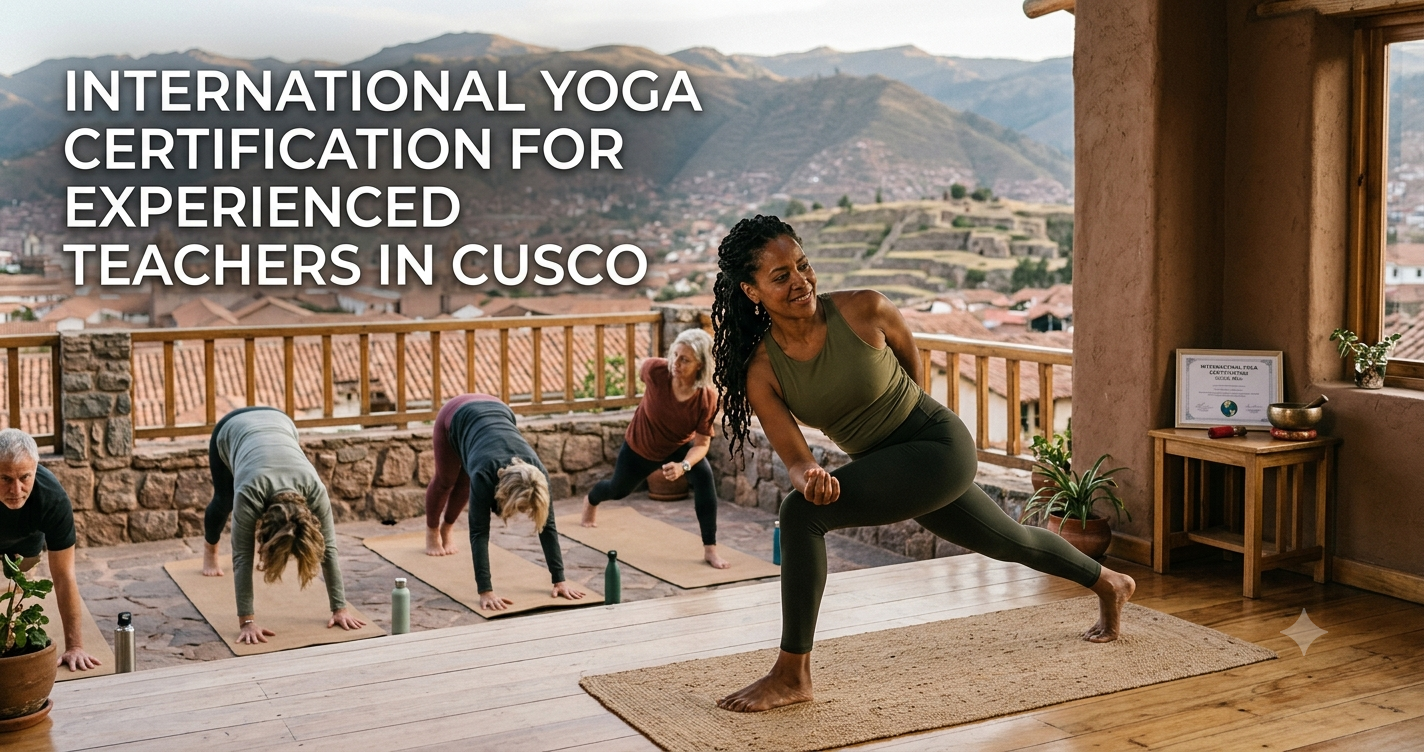
Yoga teachers with years of schooling often need to validate their expertise, enhance their professional profile, and boost their opportunities beyond their local network. International Yoga Certification for Experienced Teachers in Cusco can provide a thorough way for established teachers to demonstrate their expertise while at the same time aligning their professional credentials with globally recognized expectations.
For instructors going for walks in Cusco, this could be especially treasured due to the fact that the metropolis attracts yoga practitioners, primarily site visitors, retreat participants, and groups from many unique international locations. Experienced teachers won’t want to pursue certification in the same manner as novices. Their priorities are frequently professional recognition, evaluation of gift abilities, continuing education, teaching methods, and credibility.
Why Should Experienced Yoga Teachers in Cusco Consider International Certification?
For experienced teachers, International Yoga Certification for Experienced Teachers in Cusco can represent a professional validation of expertise gained through years of coaching, workshops, and interaction with college students. Experience is distinctly treasured, but formal certification could make it much easier for university students, studios, proper wellness firms, and global partners to recognize.
A stated credential can provide a clearer professional identification and show that an instructor has developed expertise in areas that include asana, pranayama, meditation, teaching methods, anatomy, ethics, and student protection. Cusco additionally has a clearly defined one-of-a-kind role within the international health and tourism panorama.
Teachers may work with community residents, similarly to web page visitors from Europe, North America, Asia, and other parts of South America. Internationally oriented credentials can therefore be beneficial whilst speaking to college and university students who are conversant in formal yoga certification systems.
What professional benefits can certification provide?
-
Greater Professional Credibility: A formal yoga coaching qualification should make a professional teacher’s expertise more credible and easier to communicate to students and agencies.
-
International Professional Recognition: International certification can assist teachers in presenting their qualifications to audiences outside their immediate vicinity.
-
Stronger Professional Profile: A certified yoga instructor can include applicable credentials in professional biographies, internet websites, portfolios, and promotional materials.
-
Validation of Existing Knowledge: Certification can also provide a framework for reviewing information that instructors have gained through years of teaching.
-
Continuing Education Opportunities: Advanced certification can inspire professional instructors to hold analysis in preference to relying solely on prior schooling.
-
Expanded Teaching Opportunities: Formal credentials may additionally assist with packages for residences, retreats, health centres, workshops, and unique expert settings.
How Does International Yoga Certification Differ for Experienced Teachers?
The dreams of a professional yoga teacher are generally one-of-a-kind compared to those of someone entering the career for the first time. Beginners usually need to establish foundational statistics, increase training skills, recognize sequencing, and gain self-confidence in operating with college students. Experienced instructors, by contrast, may additionally have already gained vast practical experience and hundreds or thousands of hours of coaching.
International Yoga Certification for Experienced Teachers in Cusco can consequently be approached as an expert improvement and validation pathway in place of actually an advent to yoga education. A suitable certification device for knowledgeable teachers should take into account the instructor’s current experience while retaining basic requirements for assessment. Depending on the enterprise and certification pathway, assessment can also consider teaching technique, sensible coaching, theoretical facts, ethics, anatomy, pranayama, meditation, splendor making plans, and expert conduct.
Which regions may be evaluated?
-
Teaching Experience: Previous coaching experience can offer essential evidence of expert improvement. Experienced instructors want to be prepared to file relevant coaching information where the certification pathway requires it.
-
Practical Teaching Skills: Assessment can also remember how truly a teacher demonstrates and explains postures, offers instructions, manages a class, and adapts practices to big pupil needs.
-
Yoga Philosophy: Advanced expert training can embody knowledge of conventional yoga philosophy and the mindset that informs responsible yoga training.
-
Anatomy and Safety: Understanding movement, alignment, contraindications, adjustments, and pupil safety is important for informed teachers.
-
Teaching Methodology: Effective guidance involves more than personal exercise. Assessment can also include sequencing, communication, demonstration, class structure, and ability.
-
Professional Ethics: Ethical teaching practices help establish boundaries and are respected by instructors and students.
What Are the Main Requirements for Advanced Yoga Certification in Cusco?
The requirements for International Yoga Certification for Experienced Teachers in Cusco can vary depending on the certifying organisation, certification stage, and expert records of the applicant. Some pathways can also require evidence of preceding yoga training, education, practical competency, continuing training, or assessment. Others can also have unique requirements regarding documentation, examinations, education demonstrations, or expert necessities.
For a skilled trainer, coaching should be based on identifying current qualifications and evaluating them against the certification requirements. It can be beneficial to create an expert record containing previous yoga trainer training, workshops, professional courses, coaching experience, retreats, continuing education, and relevant sports activities. This guidance permits teachers to recognize where their experience already meets the predicted requirements and where further studying or assessment may be essential.
What do instructors need to assess in advance before making use of?
-
Previous Yoga Training: Collect information on completed yoga trainer education and relevant academic programmes. This allows the collection of clear information on formal yoga training.
-
Teaching Experience: Record the forms of instruction taught, approximate training length, student groups, and teaching environments. Such records can demonstrate practical experience.
-
Specialised Training: Include schooling in regions along with meditation, pranayama, restorative yoga, prenatal yoga, recuperation techniques, or one-of-a-kind applicable disciplines, where applicable.
-
Assessment Requirements: Determine whether or not the certification includes written examinations, practical checks, education demonstrations, interviews, or documentation requirements.
-
Certification Standards: Review the organization’s standards, scope, and terminology carefully. Teachers have to recognize exactly what the certificate represents and avoid assumptions.
-
Professional Documentation: Maintain correct certificates, training statistics, expert biographies, and supporting documents. Organised documentation might also make the certification process less intimidating.
Can Experienced Yoga Teachers in Cusco Get Certified Without Starting From the Beginning?
Experienced teachers frequently wonder whether they want to repeat an entire foundational yoga teacher training programme before receiving an advanced credential. The solution is predicated on the certification corporation and its specific tips. Some programs may, moreover, recognize previous training and professional experience, while others may additionally require applicants to complete specified educational requirements regardless of their previous experience.
This is why teachers need to take a look at eligibility and recognition policies before deciding on a worldwide yoga certification pathway. The purpose of recognising previous experience is not always to bypass expert requirements. Instead, a professional-trainer pathway can offer an opportunity to evaluate day-to-day competencies toward a defined framework.
A trainer might also already own massive amounts of information; however, they can still benefit from reviewing unique subjects, updating technical information, or completing formal tests. For instructors in Cusco, this method may make professional improvement more applicable and green while retaining a focus on excellence.
How can previous learning help certification?
-
Portfolio Development: An expert portfolio can showcase coaching experience, training certificates, workshops, and educational achievements.
-
Prior Learning Recognition: Some certification pathways may also not recognize previous schooling or experience while determining eligibility.
-
Focused Professional Development: Experienced instructors can grow to be aware of specific areas requiring development, in preference to treating each hassle as absolutely new.
-
Practical Competence: Years of teaching can provide valuable proof of classroom management, verbal exchange, sequencing, and pupil interaction. Formal evaluation can help verify their competencies.
-
Advanced Learning: Experienced teachers can also use certification as a possibility to deepen their know-how in philosophy, anatomy, meditation, pranayama, pedagogy, or unique advanced areas.
-
Professional Progression: A higher-diploma qualification can enable an instructor’s long-term professional improvement. It can turn out to be a part of a broader pathway concerning expert education and workshops.
How Can International Yoga Certification Improve Career Opportunities in Cusco?
Cusco’s global environment can create possibilities for yoga teachers who can communicate effectively with numerous student organizations. International Yoga Certification for Experienced Teachers in Cusco can also fortify a trainer’s professional presentation while drawing closer to yoga studios, motels, retreats, wellness centres, tourism-targeted programmes, or personal clients. While certification does not automatically guarantee employment, a solid and credible qualification may make it less complicated to communicate expert competence to agencies that value documented training.
Experienced teachers can also use certification as a part of a broader expert approach. Instead of relying solely on studio employment, teachers may also offer workshops, private lessons, retreat programmes, online education, company wellness activities, or specialised courses. International certification can become one element of a professional portfolio that still consists of training experience, testimonials, continuing education, communication skills, and a strong teaching specialty.
Where may additionally licensed teachers study their talents?
-
Yoga Studios: Established studios may also be trying to find instructors with strong, relevant experience and clear, expert qualifications. Certification can help teachers present their credentials more effectively.
-
Wellness Retreats: Retreat programmes regularly appeal to worldwide participants. Teachers with strong experience and internationally oriented credentials may be better placed to share their expertise.
-
Hotels and Resorts: Wellness-centered hospitality agencies might also provide yoga classes to vacationers. Teachers want to take a look at each position’s specific hiring and qualification requirements.
-
Private Yoga Instruction: Certification can aid a professional profile for teachers offering one-to-one or small-group sessions. Clear credentials can assist potential clients in understanding the trainer’s credentials.
-
Workshops and Events: Experienced teachers may additionally amplify specialized workshops such as meditation, mobility, pranayama, philosophy, or exquisite regions.
-
International Collaborations: Teachers interested in working with international yoga businesses or retreat businesses may also find that documented qualifications make expert verbal exchange less hard.
What Should You Look for in an International Yoga Certification Programme?
Choosing an international yoga certification requires more than choosing the programme with the most attractive selection. Experienced instructors need to test out the agency’s requirements, evaluation method, certificate scope, curriculum, teacher qualifications, documentation, and method of continuing training. The most appropriate programme needs to support the instructor’s professional goals while providing clear information about what the certificate actually confirms.
Teachers in Cusco also want to consider whether they want certification for professional credibility, superior training, global mobility, specialisation, personal development, or a mixture of those goals. Certificates should be evaluated according to their real value rather than the use of terms such as “worldwide” or “advanced.” Clear requirements and apparent certification strategies are strong signs of professional excellence.
What factors need to have an impact on your choice?
-
Transparent Standards: Look for a certification organization that clearly explains its educational and expert requirements. Transparency lets instructors recognize what they’re truly being licensed for.
-
Relevant Curriculum: The curriculum should cover subjects appropriate to the certification level. Experienced teachers need to seek significant advanced schooling rather than useless repetition.
-
Assessment Quality: A credible certification pathway should provide a clear purpose for how competency is evaluated. Practical and theoretical evaluation can provide a more complete picture of expert capability.
-
Experienced Assessors: The qualifications and extensive experience of assessors may also have an impact on the effectiveness of an assessment technique. Teachers must search for clear statistics about who evaluates candidates.
-
International Scope: Understand what an “international” approach is within the suitable certification device. Check whether or not the credential is intended for global professional presentation.
-
Continuing Education: Strong expert certification needs to inspire ongoing studying. Teachers can gain from programmes that help sustained improvement after the preliminary credential is furnished.
How Can Experienced Teachers Prepare for International Yoga Certification?
Preparation for International Yoga Certification for Experienced Teachers in Cusco ought to begin with an expert skills audit. Teachers can study their modern-day understanding, education methods, academic statistics, and areas of specialisation in advance of evaluating those with the certification requirements. This is mainly beneficial for teachers who’ve gathered information informally through years of work and schooling but may not have, to this day, completed a structured instructional assessment of yoga concepts, anatomy, philosophy, or pedagogy.
Practical coaching is similarly important. Experienced instructors need to assess proper sequencing, verbal cues, demonstrations, adjustments, observation abilities, pupil protection, and professional ethics. They can also revisit conventional yoga standards and cutting-edge coaching standards to make sure that their understanding remains modern and well organised. A systematic practice framework permits you to turn years of practical experience into a coherent professional qualification.
What education steps are useful?
-
Review Core Knowledge: Revisit asana, pranayama, meditation, yoga philosophy, anatomy, teaching methods, and ethics. This lets you become aware of gaps earlier than formal assessment.
-
Evaluate Teaching Technique: Record or have a look at your very own teaching and evaluate your commands, sequencing, demonstrations, pacing, and student engagement.
-
Update Safety Knowledge: Refresh expertise of contraindications, modifications, alignment, and responsible teaching practices. Experienced teachers need to keep refining their approach to student safety.
-
Organise Credentials: Keep copies and records of previous certifications, workshops, expert guides, and relevant continuing training. This makes professional documentation a great deal less difficult to manage.
-
Practise Assessment Skills: If the certification consists of examinations or training demonstrations, study explaining ideas sincerely rather than relying on practical familiarity.
-
Define Professional Goals: Decide what you want the certification to achieve, along with more credibility, advanced schooling, global opportunities, retreat coaching, or expert development.
Is International Yoga Certification Worth It for Experienced Teachers in Cusco?
For a professional instructor, the value of International Yoga Certification for Experienced Teachers in Cusco depends on professional desires, the quality of the certification organization, and the manner the credential fits into a present-day career. Certification may be profitable at the same time as it provides a strong evaluation, a formal reputation of abilities, established perseverance with training, and a clearer professional profile.
It may be particularly useful for teachers who want to present their qualifications to college students or corporations worldwide. However, certification must not be considered instead of schooling experience. The most effective professional profile generally combines sensible teaching potential, sound information, ethical conduct, continuous learning, verbal exchange abilities, and relevant certification.
Teachers need to consequently pick out a credential because it really allows for their professional improvement in the region of, in reality, collecting a few different certificates. For instructors in Cusco, an internationally oriented qualification may be a strategic addition to an established yoga profession, even if chosen carefully.
What makes certification precious in the long term?
-
Professional Validation: A formal credential can offer documented proof of education and competency. This could strengthen the presentation of a professional trainer’s expert background.
-
Student Confidence: Students may additionally feel more confident choosing a trainer whose education and credentials are clearly documented.
-
International Positioning: Teachers working with international students can present their qualifications more easily after they have a clearly documented professional credential.
-
Career Development: Certification can end up as part of an extended professional improvement pathway. Teachers can maintain professional development through schooling, workshops, mentoring, and superior training.
-
Professional Differentiation: In a competitive, fast-paced environment, certifications and qualifications can help an instructor distinguish their services.
-
Lifelong Learning: The most valuable advantage may be the encouragement to continue gaining knowledge. Yoga teaching evolves through ongoing study, practical experience, and professional development.
Get your internationally recognized yoga certification with authentic yoga standards in South America.
Conclusion
International Yoga Certification for Experienced Teachers in Cusco can be a valuable professional development opportunity for teachers who have already been given awesome coaching and need to formalise their qualifications. Rather than repeating novice-level education, expert instructors can look for certification pathways that effectively assess current expertise while also encouraging deeper self-reflection and continued learning.
For yoga professionals in Cusco, global certification may additionally assist stronger expert identification in a city with a significant local and international target market. The only approach is to assess certification necessities cautiously, confirm eligibility requirements, understand the assessment process, and pick out a credential that in fact aligns with long-term professional dreams. Ultimately, certification works excellently when combined with true training, accountable training, ongoing studying, and a dedication to preserving immoderate professional standards.
Explore Our Recent Blogs
Frequently Asked Questions
1. What is International Yoga Certification for Experienced Teachers in Cusco?
International Yoga Certification for Experienced Teachers in Cusco is a professional certification pathway designed to assist established yoga instructors in demonstrating their education, experience, and training competencies officially. The unique curriculum, assessment system, and eligibility requirements depend on the business corporation presenting the certification. Experienced teachers must evaluate the certification requirements cautiously to understand what the credential represents.
2. Do experienced yoga teachers need to complete beginner-level training again?
Not necessarily, due to the reality that certification requirements vary between companies and programmes. Some pathways may additionally recognize preceding yoga training and coaching experience, even as others may additionally require specific schooling or tests no matter what. Teachers should verify whether or not earlier qualifications, previous certificates, and education data are required before enrolling.
3. Can international yoga certification help teachers work with international students?
Yes, a genuinely documented professional qualification could make it less complex for instructors to share their instructional history with international college students and corporations. However, certification no longer automatically offers employment or permission to teach outside the country. Local hints, business enterprise necessities, and the policies of person agencies should constantly be checked one by one.
4. What subjects are important for advanced yoga teacher certification?
Important subjects can encompass asana, pranayama, meditation, yoga philosophy, anatomy, teaching approach, sequencing, ethics, and student safety. Advanced programmes may additionally place extra emphasis on coaching competency, professional improvement, and specialized knowledge. The unique subjects depend on the certification framework and diploma.
5. How can experienced yoga teachers prepare for certification in Cusco?
Teachers can start by reviewing their previous education, coaching experience, professional credentials, and current information. They must look at the regions with the certification requirements and understand any subjects that need extra attention. Practising coaching demonstrations, reviewing safety ideas, and organising expert documentation can also assist with guidance.
6. Is advanced yoga certification useful for a long-term teaching career?
Advanced certification may be beneficial whilst it gives significant professional improvement and enhances a teacher’s current-day training level. It can also improve a professional portfolio and provide useful resource opportunities regarding studios, retreats, workshops, private schooling, or international groups. Its real value depends on the credibility and standards of the business corporation issuing the certification and the teacher’s personal professional goals.