
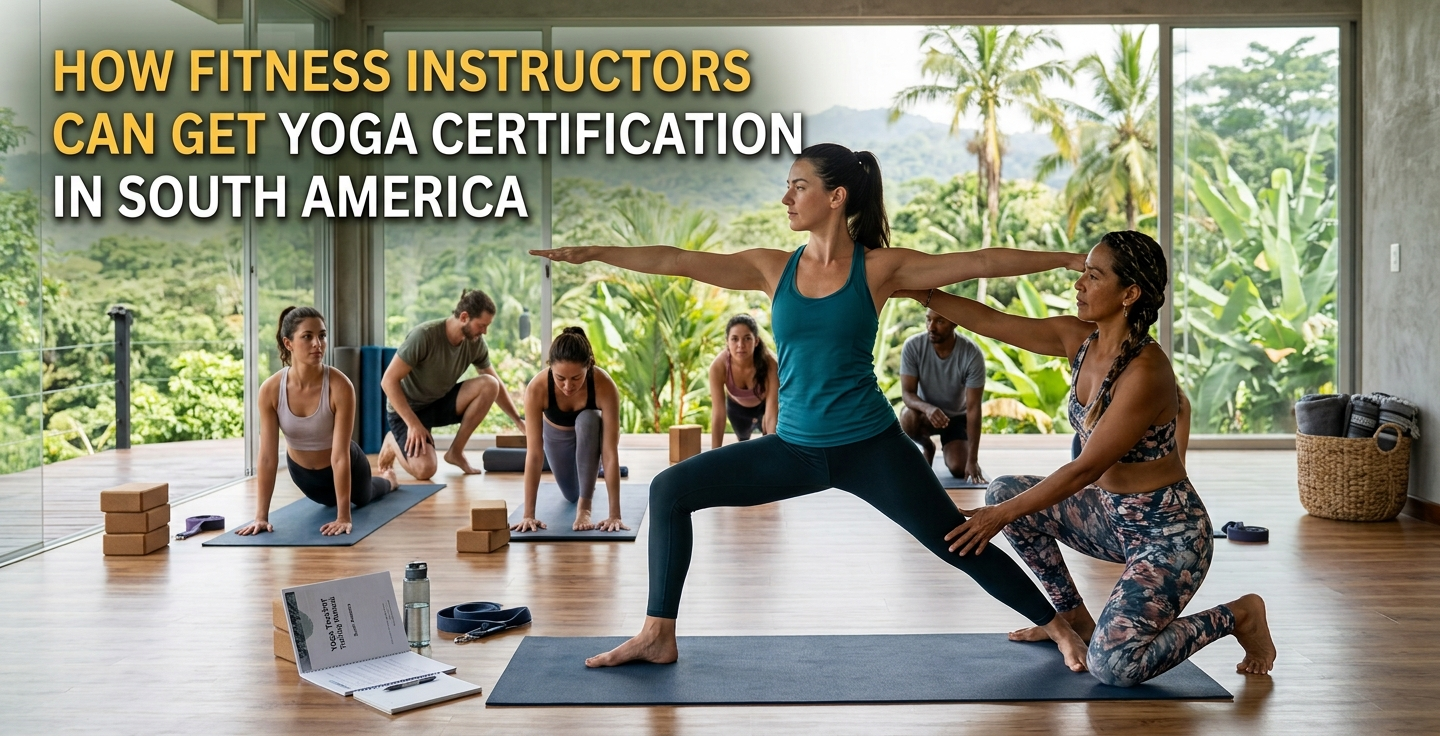
Fitness instructors already have a strong foundation in physical education, exercise strategies, body movement, and client motivation. Learning How Fitness Instructors Can Get Yoga Certification in South America can assist them in expanding their professional abilities and finding new possibilities within the developing fitness and well-being business enterprise. Yoga combines bodily postures, respiratory techniques, meditation, flexibility, balance, and mindfulness, complementing traditional health training.
South America offers possibilities for fitness specialists interested in developing their yoga teaching abilities. Countries that include Brazil, Argentina, Chile, Colombia, and Peru have growing yoga groups, fitness centres, and well-being studios. A well-based yoga trainer education programme can help instructors understand yoga requirements and teach students effectively.
Whether you focus on personal training, employer health, power education, or Pilates, yoga training can supplement your current knowledge. With the right certification, sensible practice, and proper study, you can increase your offerings, gain specific client groups, and find out expert opportunities within the international health industry.
Why Should Fitness Instructors Consider Yoga Teacher Certification in South America?
Fitness specialists often work with customers who need to enhance strength, flexibility, mobility, posture, and overall physical health. Traditional fitness programmes generally focus on overall workout performance, cardiovascular fitness, and muscle development. Yoga introduces a special method by combining physical movement with breath awareness, rest, and mental well-being. This approach allows health teachers to provide more varied education, research, and resources to meet specific client needs.
Getting yoga trainer certification in South America can assist health teachers in extending a broader knowledge of movement and holistic well-being. It moreover offers an opportunity to research and implement yoga training techniques and understand how to tailor practices for specific needs. Rather than changing their fitness qualifications, yoga training can complement their professional records and enhance their everyday service offering.
Benefits of Adding Yoga to Fitness Training
-
Expanded Professional Skills: Yoga instructor training introduces fitness instructors to asanas, pranayama, meditation, rest, and mindful movement.
-
More Varied Fitness Programmes: Certified instructors can amplify instruction that integrates appropriate yoga practices with their current fitness services.
-
Improved Understanding of Body Movement: Yoga training covers alignment, posture, managed motion, and frame awareness. These facts can help instructors understand different movement styles.
-
Access to Different Client Groups: Yoga instructors can also attract novices, older adults, working professionals, and those interested in a light physical hobby.
-
Professional Development: An extra certification demonstrates a dedication to studying and increasing expert understanding. It can also assist teachers in building a more extensive professional profile.
-
International Learning Opportunities: South America gives access to unique yoga groups, cultural experiences, and educational environments.
Take the Next Step in Your Yoga Journey with YAI South America
Whether you are a yoga teacher looking for professional certification or a yoga school seeking certification, YAI provides opportunities to support your professional journey and recognition. Choose the relevant application below to get started.
School: https://form.jotform.com/250402319636452
Teacher: https://form.jotform.com/250700797178464
What Qualifications Do Fitness Instructors Need Before Applying for Yoga Teacher Training?
Fitness teachers usually have a beneficial starting point for yoga teacher education because their expertise consists of physical movement, exercise instruction, and client interaction. Knowledge of anatomy, body structure, stretching, energy development, and fitness assessment can assist their yoga instruction. However, previous health qualifications do not automatically update the requirements of a yoga trainer training programme. Each certification provider establishes its very own admission requirements.
Most beginner-level yoga instructor training programmes do not require candidates to keep an up-to-date yoga coaching qualification. Some companies may additionally recommend regular personal yoga practice or basic familiarity with common yoga postures. Fitness instructors who’ve never practised yoga can, however, find suitable beginner programmes, provided they are willing to extend their non-public workout and complete the required coursework.
Common Skills and Documents That May Support Your Application
-
Fitness Instructor Qualification: A private training, enterprise health, sports school, or exercise guidance certificate can support your application.
-
Basic Anatomy Knowledge: Understanding muscle mass, joints, movement styles, and frame mechanics ought to make yoga anatomy education easier to understand.
-
Personal Yoga Practice: Regular practice allows applicants to become familiar with asanas, breathing strategies, and movement sequences.
-
Identification Documents: Training companies might also request a passport, national identity card, or other identification during registration.
-
Educational Background: Some companies can also request fundamental educational records or prior education certificates. Specific academic qualifications depend on the institution and its admission requirements.
-
Willingness to Learn: Yoga instructor education includes philosophy, teaching methods, meditation, and ethical obligations. An open set of thoughts and determination to regularly have a look at them.
How Can Fitness Instructors Choose the Right Yoga Teacher Certification Programme in South America?
Selecting the proper yoga teacher certification programme is an essential preference because the quality of the curriculum, training level, and certification standards can affect professional development. Fitness teachers first need to understand their professional goals. Someone who wants to introduce crucial yoga training into a fitness agency may also have unique requirements for someone planning to become a full-time yoga instructor.
Before enrolling, candidates need to take a look at the programme structure and understand what the route consists of. An entire curriculum normally covers yoga postures, anatomy and frame shape, respiratory practices, meditation, yoga philosophy, teaching approach, and sensible training periods. It is also crucial to test whether or not the route gives sufficient supervised exercise and comments from skilled instructors.
Factors to Evaluate Before Enrolment
-
Course Curriculum: Look for a balanced curriculum overlaying practical yoga, theoretical information, anatomy, philosophy, breathing, and teaching techniques.
-
Training Hours: Compare the duration and total training hours of diverse programmes. A 200-hour yoga trainer certification path is not an unusual place to start for aspiring teachers.
-
Trainer Experience: Research the qualifications, coaching backgrounds, and professional experience of the walking footwear.
-
Practical Teaching Experience: training practice permits health teachers to increase communication competencies and self-confidence.
-
Certification Standards: Check the business enterprise issuing the certificate and the standards followed with the help of the education provider.
-
Course Format: Compare residential, in-person, online, and hybrid programmes. Consider your work time, desk area, getting-to-know options, and ability to wait realistic durations.
Which Yoga Teacher Certification Is Best for Fitness Instructors in South America?
The superb yoga instructor certification relies upon a trainer’s experience, professional desires, and desired coaching style. Fitness teachers who are new to yoga may additionally benefit from beginning with a foundational 200-hour programme. This diploma normally introduces the critical ideas of yoga workouts and teaching, assisting students in developing the understanding required to guide novice-level instruction.
More advanced certifications may be appropriate after finishing foundational training and gaining extra training experience. For instance, 300-hour and 500-hour programmes can provide opportunities for deeper checks, advanced teaching strategies, and specialized practices. Fitness instructors want to avoid deciding on a route because it offers a higher range of training hours. The curriculum, instructor qualifications, practical relevance, and certification recognition remain essential troubles.
Common Yoga Certification Levels
-
CYT 200 Certification: A 200-hour yoga instructor certification is a common foundation for people entering into professional yoga training.
-
CYT 300 Certification: A 300-hour programme gives extra advanced learning for individuals who’ve already finished foundational yoga trainer training.
-
CYT 500 Certification: A 500-hour certification represents an extra degree of yoga education, depending on the programme structure.
-
Hatha Yoga Training: Hatha yoga makes a speciality of physical postures, breathing strategies, and controlled movement. It may be a useful place to begin for health instructors.
-
Vinyasa Yoga Training: Vinyasa yoga connects movement with breathing through flowing sequences. Fitness experts familiar with workout programming can also find its sequencing technique interesting.
-
Specialised Yoga Training: After foundational education, instructors might also explore restorative yoga, prenatal yoga, chair yoga, or other specialised areas.
How Long Does It Take Fitness Instructors to Complete Yoga Teacher Certification?
The duration of yoga instructor certification depends on the education format, programme type, daily schedule, and educational requirements. An extensive residential course may be finished within several weeks, while a part-time programme can take several months. Fitness instructors need to not forget their present work commitments before selecting an education schedule.
A not unusual starting point is a 200-hour yoga instructor training programme. Some exceptional programmes organise the hours right into a centered residential timetable, while wonderful institutions distribute learning during weekends or over a couple of months. The number of calendar days alone no longer decides the best route. Students must also remember the time required for personal workouts, assignments, training assessments, and independent study.
Understanding Different Training Schedules
-
Intensive Residential Training: Residential programmes regularly contain daily yoga exercises, theoretical instruction, meditation, and coaching for sports.
-
Part-Time Training: Part-time programmes spread learning over an extended period. They may also help fitness teachers who want to maintain their work while finishing their yoga teaching.
-
Weekend Training: Some groups set up teaching throughout weekends or specific days. This format can also make it much less complicated for working professionals to manage their current responsibilities.
-
Online Learning: Online programmes can also provide flexibility for theoretical subjects together with yoga philosophy and anatomy. However, students have to test how realistic coaching and evaluation requirements are fulfilled.
-
Hybrid Programmes: Hybrid training combines online learning with in-person sessions of sensible durations. It may be beneficial for students who want flexibility while still receiving direct guidance from instructors.
-
Advanced Training: Higher-level certification programmes require more in-depth knowledge of foundational training. Their duration is based entirely on the course structure.
What Do Fitness Instructors Learn During Yoga Teacher Certification?
Yoga instructor certification entails more than studying a manner to carry out physical postures. It introduces students to the standards, philosophy, training obligations, and sensible techniques involved in guiding yoga training. Fitness teachers may already understand exercise techniques; however, yoga education develops an outstanding approach to movement that includes breathing awareness, focus, rest, and mindfulness.
A well-structured yoga teacher education programme normally combines theoretical training with practical sessions. Students learn how to demonstrate postures, offer clear movement instructions, observe students, and modify practices with precision. This information is particularly useful for health experts who want to introduce yoga into personal training sessions, institutional programs, or well-being programmes.
Important Subjects Covered in Yoga Teacher Education
-
Yoga Asanas: Students have a chance to take a look at foundational and intermediate yoga postures, along with their advantages, alignment tips, and modifications.
-
Pranayama: Breathing strategies help students recognize the connection among breath focus and yoga practice. Training can also introduce distinctive breathing exercises and provide a way to teach them effectively.
-
Yoga Anatomy and Physiology: This scenario explores muscle mass, joints, skeletal systems, movement styles, and the body’s responses to physical activity.
-
Yoga Philosophy: Students discover traditional yoga requirements, moral principles, and the broader purpose of yoga. This lets teachers understand that yoga involves more than physical exercise.
-
Meditation and Relaxation: Training introduces hobby practices, mindfulness, guided rest, and techniques that consist of Yoga Nidra. These techniques can supplement physical yoga practice.
-
Teaching Methodology: Students take a look at beauty sequencing, verbal instructions, demonstrations, declaration, and student communication.
How Can Fitness Instructors Use Yoga Certification to Expand Their Careers in South America?
Completing yoga instructor certification can create greater professional opportunities for fitness teachers. Instead of imparting exceptional traditional workout periods, licensed specialists may also introduce yoga-based offerings that address flexibility, mobility, stability, breathing, and rest. This can help them expand a broader service portfolio and attract customers with strong fitness interests.
South America’s health and wellness groups provide particular environments wherein teachers can also discover their professional competencies. Opportunities can encompass working with yoga studios, health centres, wellness retreats, private clients, and online corporations. However, employment opportunities vary with the aid of the U.S., vicinity, language requirements, travel, and local professional policies. Certification by itself no longer assures employment or permission to work in remote places.
Career Opportunities After Yoga Teacher Certification
-
Yoga Studio Instructor: Fitness professionals may also take a look at education opportunities at yoga studios after completing suitable training.
-
Personal Yoga Trainer: Instructors can also offer individual yoga classes designed to suit customers’ movement abilities and personal goals. Private teaching requires careful evaluation and suitable modifications.
-
Fitness Centre Instructor: Gyms and fitness centres can also provide yoga as part of their organisation’s exercise schedules. Fitness instructors with extra yoga training can discover opportunities to provide suitable education.
-
Wellness Retreat Instructor: Some wellness retreats include yoga, meditation, and relaxation sports activities in their programmes.
-
Online Yoga Educator: Certified instructors can go into online yoga education and create academic content material. This method can assist them in helping students beyond their local region.
-
Independent Yoga Professional: Some teachers choose to extend their personal yoga instruction, workshops, or fitness groups. Building professional recognition requires excellence.
How Much Does Yoga Teacher Certification Cost in South America?
The rate of yoga teacher certification varies across South America because of variations in the U.S.A., organization, duration, lodging, and curriculum. Residential programmes may cost a little more because they could include accommodation, meals, and additional facilities. Non-residential programmes can also have lower overall costs; however, students should remember to include transport, accommodation, and daily living expenses.
Fitness teachers need to evaluate the total cost of numerous programmes instead of focusing only on the advertised training rate. International candidates need to additionally keep in mind forex, excursion costs, visa requirements, insurance, and any extra assessment or certification charges. Asking the training employer for a written charge breakdown can help prevent surprising costs.
Expenses to Consider When Planning Your Training
-
Course Tuition: This is typically the primary charge and covers the academic programme. Fees depend on the institution, training degree, training hours, and included centers.
-
Accommodation: Residential yoga trainer education can also include shared or private lodging. Students attending non-residential courses must calculate their own lodging expenses.
-
Food and Meals: Some programmes consist of meals, while others require students to bring their own food. Dietary requirements and meal arrangements must be shown before enrolment.
-
Travel Expenses: International students may also want to pay for flights, shipping, and airport transfers. Travelling between training places can also increase the general budget.
-
Study Materials: Some courses include manuals, books, and learning resources in their prices. Others may additionally charge extra for materials and further equipment.
-
Additional Charges: Certification fees, examinations, coverage, visa prices, and optional workshops can also increase the overall cost. Ask the corporation for all the facts in advance before paying the fee.
Get your internationally recognized yoga certification with authentic yoga standards in South America.
Conclusion
Yoga trainer certification allows health teachers to extend their expert capabilities and discover new possibilities in the well-being business industry. By building on their health knowledge, they can develop skills in yoga postures, breathing techniques, meditation, and coaching strategies. Choosing the right yoga teacher education programme in South America can assist their professional growth and help them prepare for one-of-a-kind learning environments.
Whether you pick CYT 200, CYT 300, or CYT 500 certification, focus on satisfactory training and practical experience; select a programme that suits your professional and personal goals. With determination and non-stop work, you may combine health know-how with yoga education. This will let you discover new teaching opportunities within the global fitness industry.
Explore Our Recent Blogs
-
How to Get Yoga Certification as a Personal Trainer in South America
-
How Physiotherapists Get Yoga Teacher Certified in South America
-
How Healthcare Professionals Get Yoga Certified in South America
Frequently Asked Questions
1. Can fitness instructors become certified yoga teachers without previous yoga experience?
Yes, fitness teachers can follow beginner-level yoga instructor training programmes even though they’ve got limited prior yoga experience. However, a few corporations can also require a standard non-public workout before enrolment. A foundational 200-hour direction can assist beginners to build the crucial practical and theoretical expertise.
2. Is a 200-hour yoga teacher certification enough to start teaching?
A 200-hour yoga instructor certification is a common foundational qualification for aspiring yoga teachers. It introduces critical subjects, including asanas, anatomy, pranayama, meditation, and coaching methods. Whether it is enough for professional teaching depends on the certification requirements, company expectations, and local requirements.
3. Can personal trainers combine yoga with strength training?
Yes, personal trainers can include suitable yoga practices in broader fitness programmes after developing suitable yoga training capabilities. They might also use yoga-stimulated motion to supplement flexibility, mobility, balance, and healing training. However, instructors want to understand the reason and limitations of every exercise rather than combining sports without making the right plans.
4. Which South American countries offer yoga teacher training opportunities?
Fitness instructors can discover yoga teacher training opportunities in global places including Brazil, Argentina, Chile, Colombia, and Peru. The availability, course layout, coaching language, and certification requirements vary among places. Applicants must research individual institutions and confirm their programmes before enrolling.
5. Can international students complete yoga teacher certification in South America?
Yes, many education vendors may also take care of the logistics for international candidates, including their admission requirements. Students need to check passport requirements, language requirements, accommodation arrangements, and the proper visa or immigration requirements. They must additionally confirm whether or not their qualifications will meet their intended professional needs after returning home.
6. Does yoga teacher certification guarantee an international teaching career?
No, completing a yoga instructor certification does not routinely guarantee worldwide employment. Career possibilities rely upon education, experience, expert competencies, language skills, organization expectations, and local conditions. Fitness teachers can expand their possibilities by gaining relevant teaching experience and continuing their professional education.